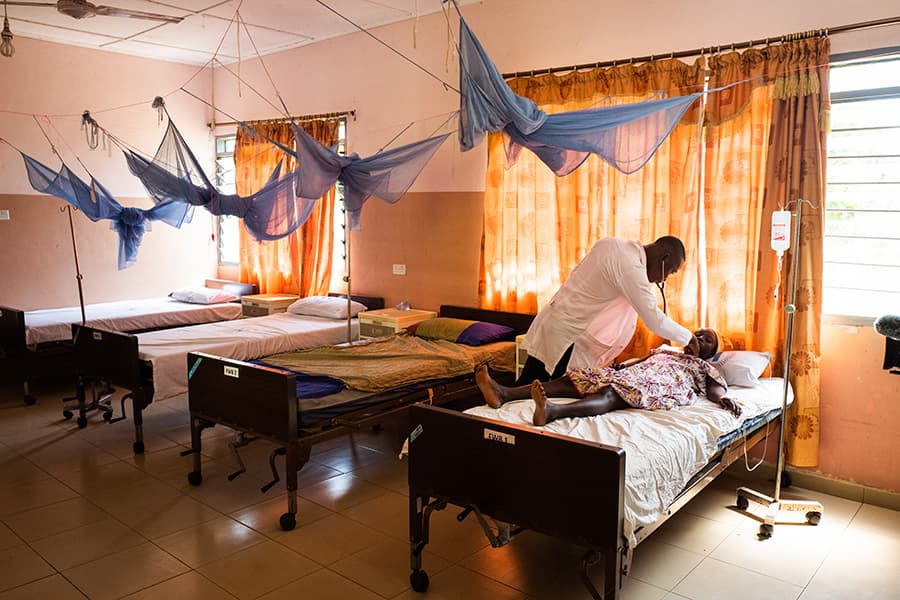
Delivering snake bite antivenom when every minute matters
The status quo
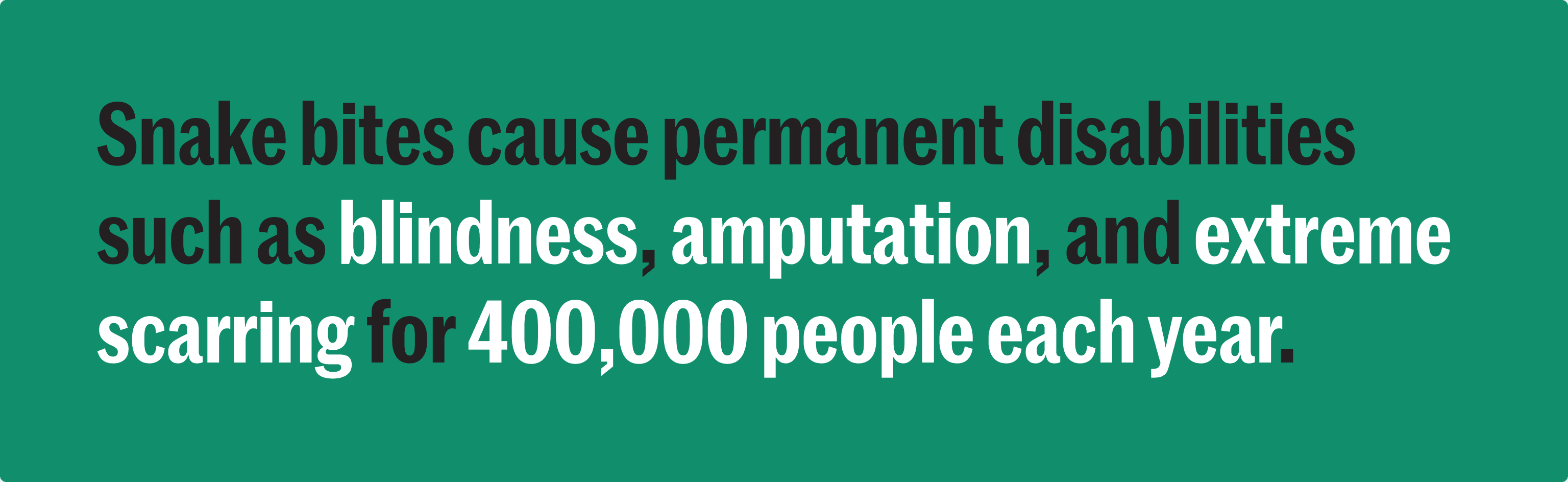
Every year snake bites kill people who could’ve lived with faster access to medicine. According to the World Health Organization (WHO), up to 2.7 million people suffer from snakebite envenomation annually, and as many as 138,000 die as a result. Snakebite victims who survive often suffer from health problems ranging from kidney, heart, and tissue damage to post-traumatic stress disorder. Snake bites cause permanent disabilities such as blindness, amputation, and extreme scarring for 400,000 people each year.1
This suffering is preventable. Antivenom is effective,2 but access is limited, especially in impoverished, agricultural communities.
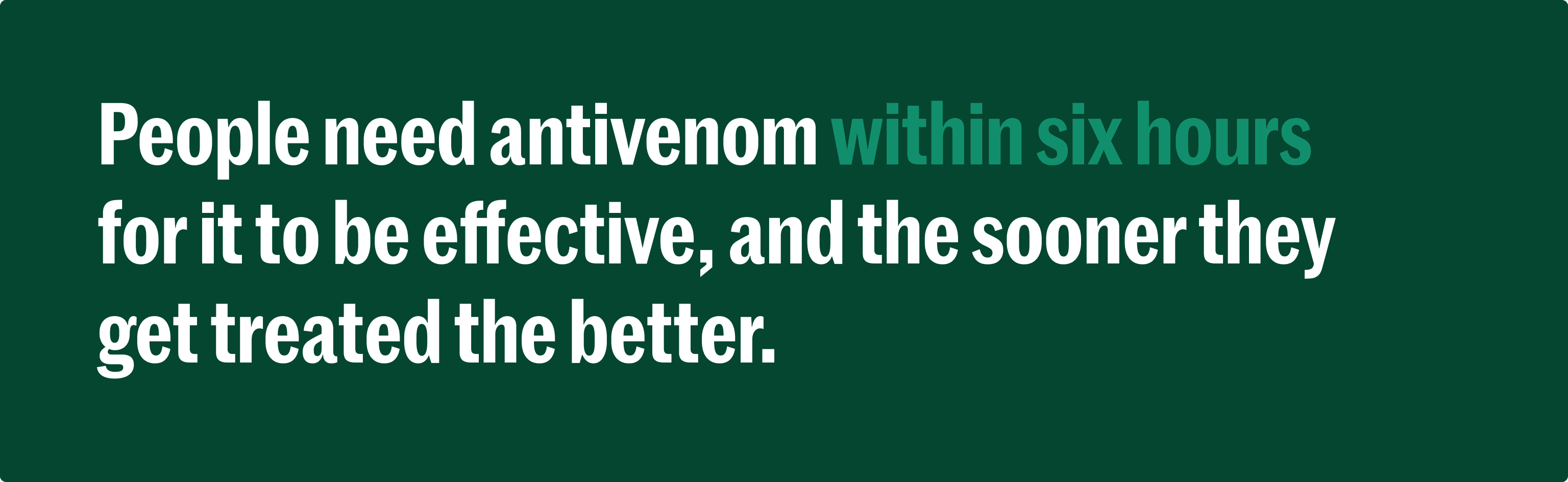
The relationship between poor logistics and poor outcomes is especially clear for people who have been bitten by venomous snakes. People need antivenom within six hours for it to be effective, and the sooner they get treated the better.
Far too often, people in rural communities have to travel hours to a health facility for treatment. If that facility doesn’t have antivenom in stock, healthcare workers refer patients to other clinics, adding travel time that can be deadly.
Zipline’s role
Poor logistics contribute to high morbidity and mortality from snakebites, and better logistics can improve outcomes. In partnership with the Ghana Ministry of Health and the Ghana Health Service, Zipline began delivering snakebite antivenom in 2019 from two distribution centers to 52 health facilities.
This condensed patients’ timeline to treatment in several ways. First, it provided a 24/7, on-demand option for health facilities that needed to treat a patient immediately. This freed facilities from having to stockpile antivenom at all times and risk wasting a valuable, temperature-sensitive medical product.
On-demand delivery also decentralized access to antivenom. Before Zipline, only regional hospitals would stock the product, in part, because it’s expensive, at an average cost of $124 per-unit,3 demand was unpredictable and antivenom often expired unused. But Zipline technology helped the health system extend the cold-chain such that workers at health centers, which are often more accessible to Ghanaians in rural, farming communities, could store and administer snakebite antivenom.
Our impact
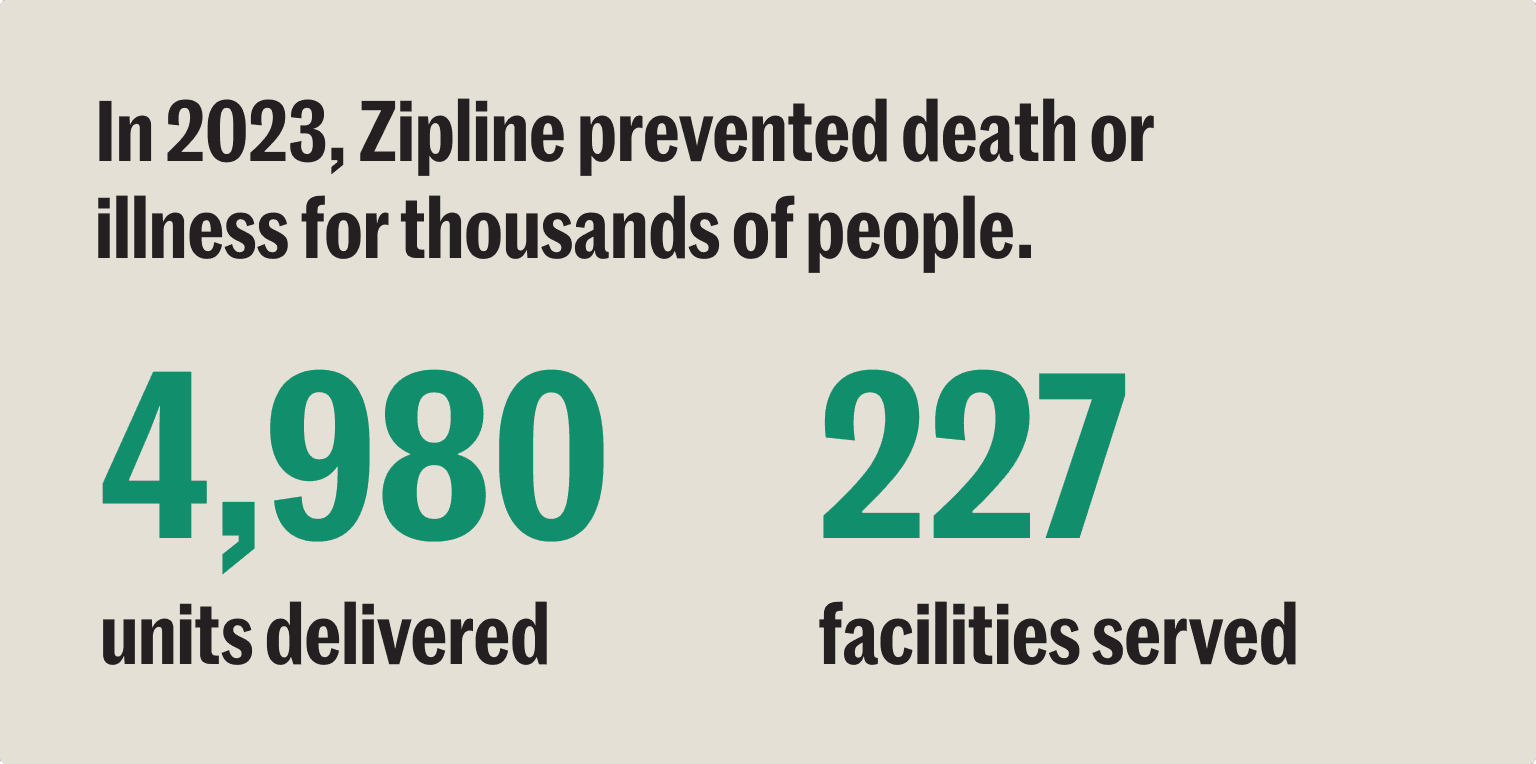
Since Zipline began delivering snakebite antivenom in Ghana in 2019, demand for the product has grown from dozens of deliveries per year to hundreds. Likely, every delivery helped treat a patient in critical condition. In 2023, Zipline’s 4,980 units of snakebite antivenom delivered to 227 facilities prevented death or illness from complications for thousands of people.
Research suggests Zipline enabled healthcare workers to treat snakebite patients onsite, rather than refer them to another facility. According to a 2022 study, the likelihood of a stockout was 73% at facilities without Zipline delivery, compared to 30% at Zipline-served facilities.4 One healthcare worker interviewed at a Zipline-served facility claimed to be able to manage 95% of snakebite cases onsite thanks to instant delivery.5
The success of Zipline’s program has become a crucial part of Ghana’s national healthcare logistics infrastructure. In the Western-North, North-East, and Oti regions in Ghana, Zipline is the sole distributor of snakebite antivenom.