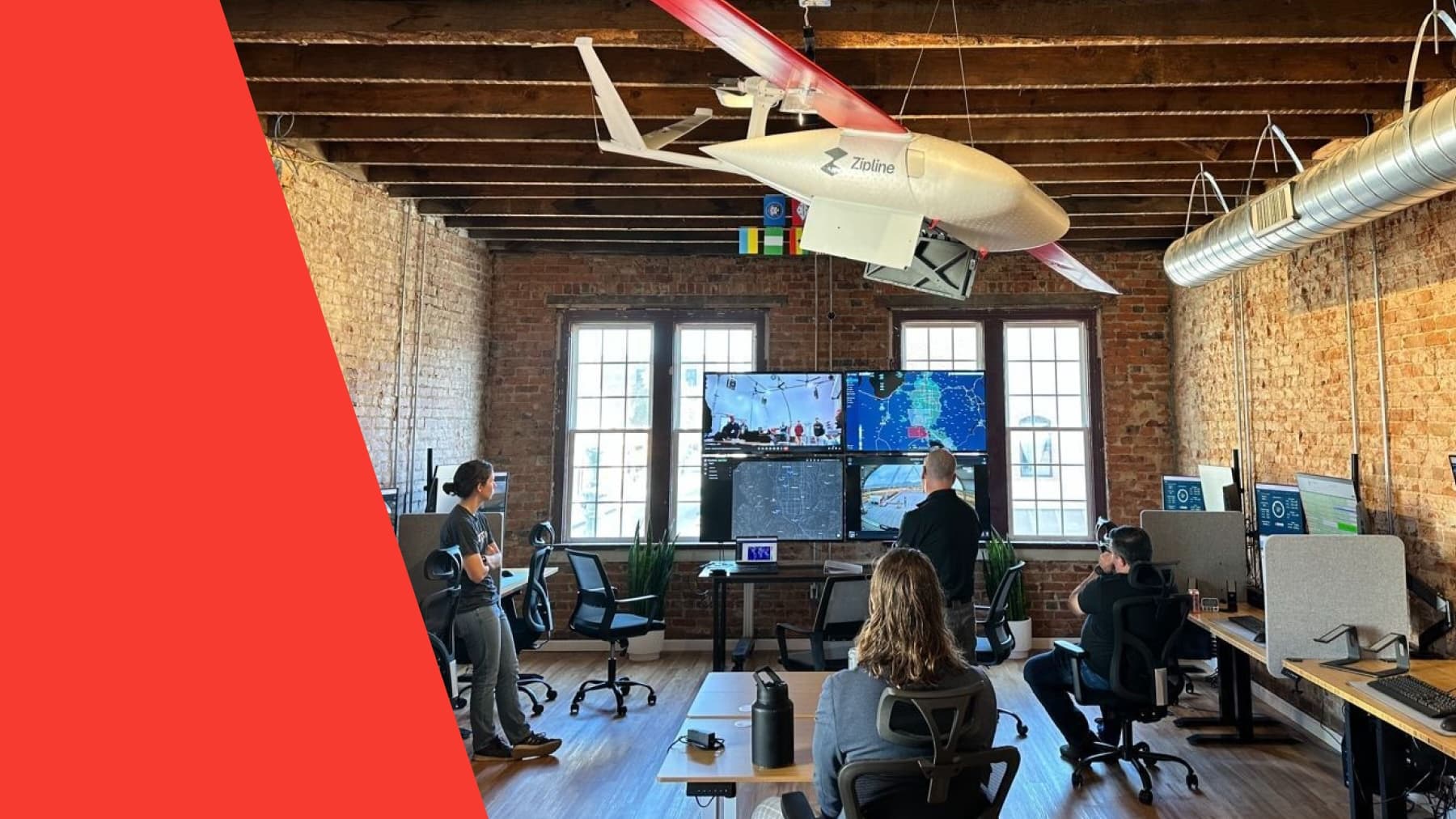
Introducing the future of remote operations for commercial drones
For commercial drone delivery to scale, operators need to oversee multiple aircraft at once. Here’s a look at Zipline’s solution.
Today, most of the aviation industry involves large, commercial air carriers. But soon, when commercial drone delivery is part of daily life for millions of Americans, the aviation industry will need systems designed for small, fully autonomous aircraft.
“Drone delivery is different from other types of aviation because it involves larger numbers of uncrewed aircraft flying shorter flights,” says Jeff Williams, head of U.S. operations at Zipline. “We need to take the best practices developed by the FAA over the past 50 years, and optimize them for autonomy at scale.”
With that in mind, Zipline has built a centralized location—called the remote operations control center, or ROCC—where qualified operators can monitor fleets of autonomous aircraft delivering across the country. The ROCC, located in Concord, North Carolina near Charlotte, is one of the first facilities of its kind.
“We need to take the best practices developed by the FAA over the past 50 years, and optimize them for autonomy at scale.”
Today, about a dozen people, primarily remote pilots in command—or RPICs—work at the ROCC, monitoring Zipline distribution centers in Utah and Arkansas. “They’re keeping tabs on the health of the entire system, the aircraft in the airspace, and watching the weather,” says Zipline Director of Flight Operations Joseph Marshall. For now, ROCC operators are validating procedures and optimizing the system to support drone delivery at scale. But when Zipline launches its next-generation P2 system in 2024, every major metro where Zipline operates will have a designated controller at the ROCC.
Though commercial drone delivery is relatively new, the ROCC’s operational model should be familiar to aviation veterans. In some ways, it works like commercial airline operational control centers (OCCs), where personnel can coordinate responses to situations like maintenance issues and provide a central point of contact for regulators and operations stakeholders. In other ways, the ROCC works like air traffic control centers, or ACCs, since operators can track the end-to-end flights of all drones in the fleet.
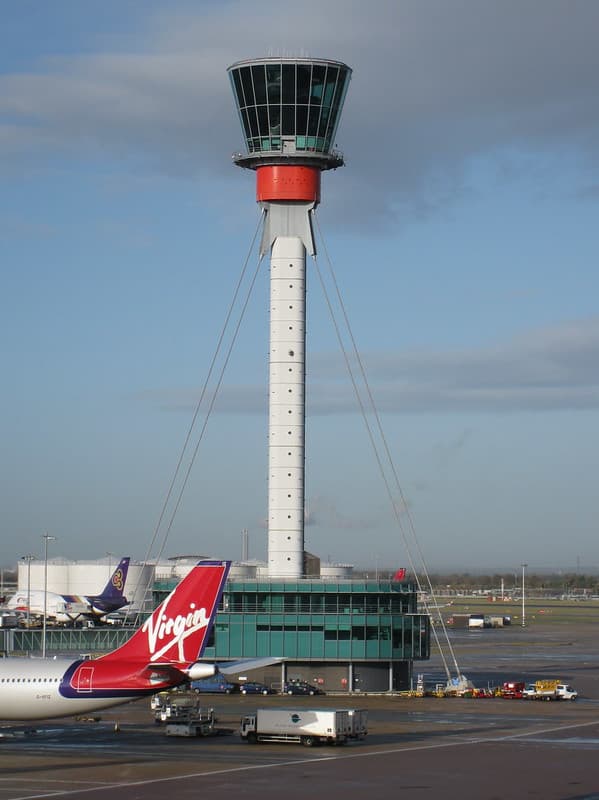
“We can compare what we do at the ROCC to what happens during a commercial flight,” says Ross Pontes, flight operations manager at the ROCC. “Let’s say a passenger plane is taking off from Miami, landing in Chicago, then continuing to San Francisco. If it has a maintenance issue in Chicago, the pilot will call the operational control center who’ll help resolve it.” Controllers at the ROCC will handle similar issues, he explains. “We’ll manage those responsibilities to minimize downtime and meet the needs of our customers.”
While the ROCC is modeled after OCCs and ACCs, certain aspects of its operations are designed specifically for uncrewed flight.
For example, there are strict Federal Aviation Administration protocols around securing the cockpit of a plane. Given that there’s no cockpit on autonomous drones, the ROCC has implemented security processes, including a badging system, for its remote pilots. These pilots will have the ability to override the drone’s flight path in the event of a safety issue such as inclement weather or another aircraft unexpectedly entering the airspace.
“We’re not completely reinventing the wheel here—we’re using certain elements of time-tested best practices that are very familiar to the FAA,” Marshall says. “The most obvious difference is that our remote pilots are centralized rather than onboard each aircraft, which simplifies certain elements of operational control.”
Having one central location also streamlines communication between the ROCC, the FAA, and other airspace users, says Pontes. It’s also the only real way to scale drone delivery, he says, especially for Zipline’s P2 system, which will be decentralized. Rather than having distribution centers for every flight, P2 drones will launch from docking systems attached to the sides of buildings or from mobile locations next to businesses.
“You wouldn’t be able to have operators stationed in little buildings spread out across hundreds or thousands of these locations,” says Pontes. “Not only is that fractured and less safe, but it’s also an enormous expenditure of resources and energy. Having the ROCC exponentially improves our efficiency and reduces our carbon footprint.”
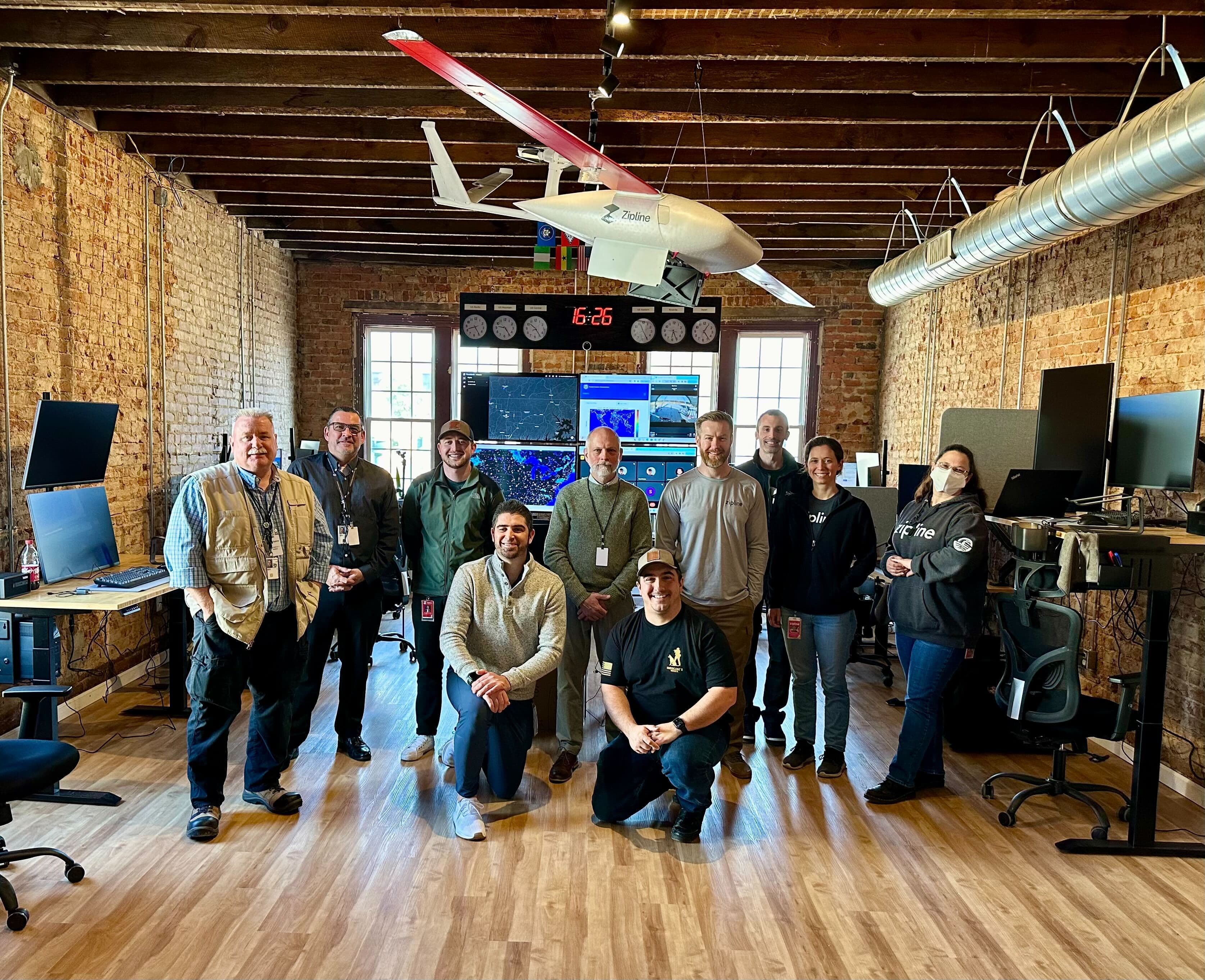
Zipline's team at the ROCC near Charlotte, North Carolina.
One of the most exciting aspects of the ROCC, according to Marshall, is what it means for aviation as a whole. “There are very few moments in aviation where the entire field is going to take a giant leap forward, but the emergence of advanced air mobility, small, aerial uncrewed vehicles and centralized remote operations is one of them. This is kind of a Wright Brothers moment—there’s real innovation happening for the entire industry.”