How drone delivery is enabling Ghana to protect more children, for less
A new study confirms that Zipline’s autonomous drone logistics system isn’t just saving lives and preventing disease—it's the most cost-effective public health intervention aimed at increasing immunization.
In rural Ghana, health challenges aren’t just logistical—they’re deeply personal. For families in remote communities, access to vaccines can mean the difference between life and death. Since 2019, Zipline and the Ghana Health Service (GHS) have partnered to tackle these challenges together, using innovative drone technology to ensure life-saving vaccines reach the hardest-to-reach areas.
Now, a newly published, peer-reviewed study offers compelling evidence of the impact of this work. Focusing on four districts in the Ghana Western North Region with around 17,000 children under two years of age, the study confirms that Zipline’s autonomous drone logistics system isn’t just saving lives and preventing disease—it’s doing so in an incredibly cost-effective and scalable way.
Delivering health and hope
In just over a year, Zipline’s centralized storage and drone delivery system brought more than 112,000 doses of vaccines—BCG, MR, PCV, and Pentavalent—to over 17,000 children living in four districts in Ghana’s Western North Region. These vaccines, critical for childhood immunization, enabled an additional 14,979 full immunization courses that wouldn’t have been completed if health facilities had relied solely on ground-based logistics.
The results are striking: this intervention helped prevent 688 cases of acute disease—including measles, pneumonia, acute hepatitis B, otitis media, and meningitis—and saved the lives of four children in 2021 alone. When these findings are extrapolated to Ghana’s entire rural population under the age of two, the potential is transformative: Zipline and GHS could save more than 190 lives and prevent approximately 21,000 cases of vaccine-preventable diseases every year.
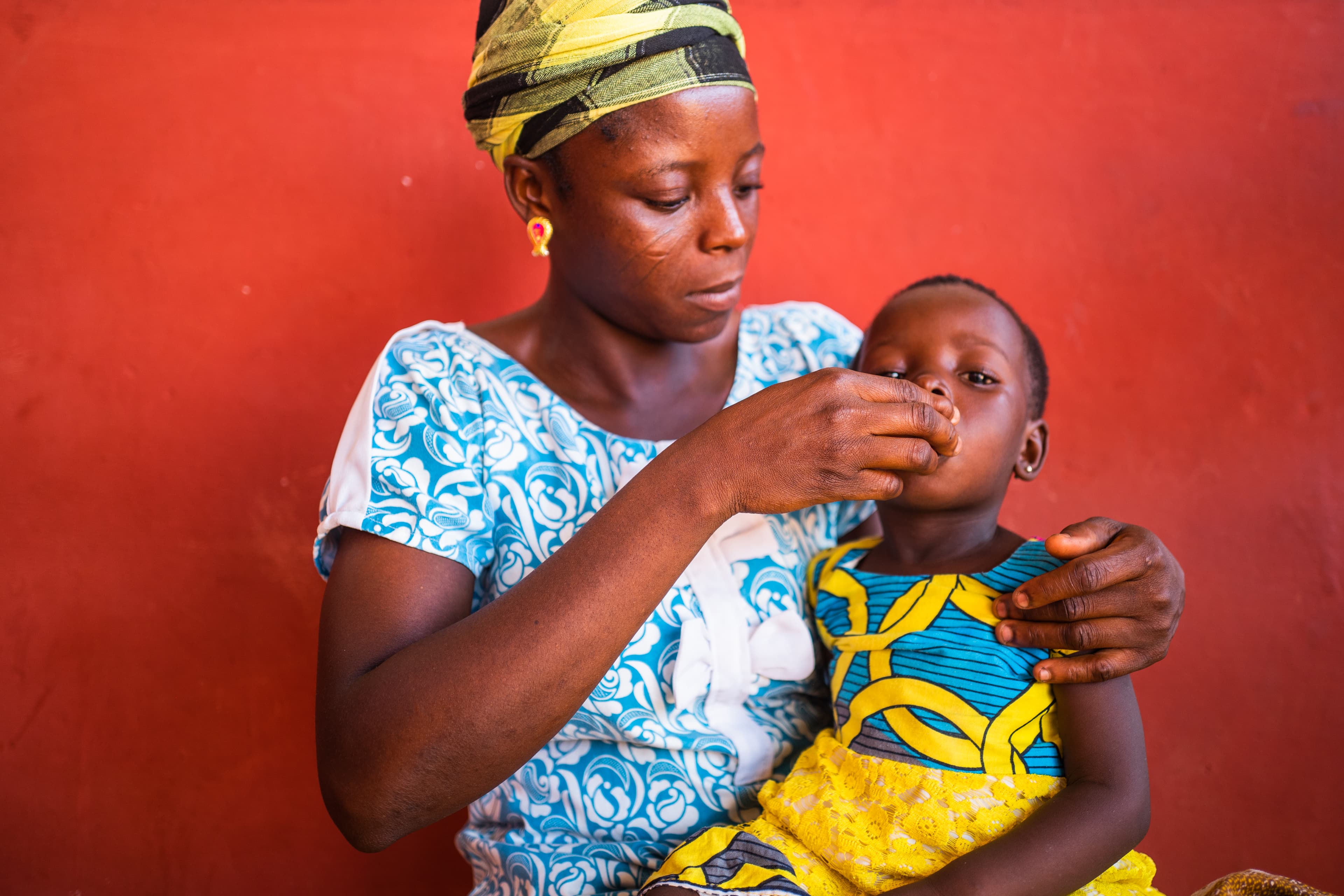
For a mother in a remote community in the Western North Region, these numbers are more than statistics—they represent a lifeline. From an early age, her oldest children were exposed to preventable diseases like pneumonia and measles because vaccines were often unavailable at their clinic. But for her two-year-old, the story is different: Thanks to Zipline’s drones, vaccines arrive on time, ensuring her child is fully immunized from the start.
A cost-effective model
Crucially, the study revealed that Zipline’s drone deliveries are not only impactful but also cost-effective. The last mile delivery cost per vaccine dose using drones was just $0.27—or $0.36 during the ramp-up period—compared to $0.47 per dose for traditional ground-based delivery methods in Ghana. This cost-efficiency is a game-changer for optimizing health system resources.
But the value doesn’t stop there. The study also found that Zipline’s model provides better returns on investment than any other public health interventions aimed at increasing immunization. Improving coverage with drones costs just $0.66 per additional Fully Immunized Child (FIC). By comparison, mobile vaccination campaigns cost $0.79 per FIC, pre-filled injection devices cost $1.19, and vaccine administration without age restrictions costs $3.92 per FIC. This means that every dollar spent on Zipline’s technology goes further, protecting more children for less.
The ripple effect of financial savings
Beyond reducing healthcare system costs, drone deliveries have provided financial relief for families. According to the study, this intervention saved families 58 Ghanaian cedis on average per episode of disease, which is equivalent to more than three days of Ghana’s minimum wage. The costliest diseases were tuberculosis and acute meningitis, which cost caregivers approximately 600 Ghanaian cedis per episode—more than one month of Ghana’s minimum wage.
A father whose child is treated for meningitis knows how costly this can be. High treatment costs, transport expenses, and lost wages can lead a family to deplete their savings and fall into hardship. Now, with vaccines arriving on time by drone, parents can worry less about their children falling ill and the associated financial burdens, and instead focus on providing for their families.
For Ghana’s healthcare system, the study suggests that benefits are equally profound. The savings from preventing disease—estimated to offset at least 65% of drone delivery costs in the most conservative scenario—free up critical resources. With fewer disease outbreaks, clinics can redirect capacity toward antenatal care, emergency treatments, and other essential services, leading to downstream improvements in care across the system. This return on investment increases the more drone logistics replaces traditional last mile delivery of vaccines.
Scaling a sustainable solution
These findings underscore the transformative potential of Zipline’s solution. By ensuring that vaccines reliably and affordably reach even the most remote communities, we’re not only transforming health outcomes in Western North, but also establishing a scalable model that could save lives across Ghana and beyond.
This was made possible by our partnership with GHS which, like us, is equally committed to improving lives through innovation. This study is a powerful testament to how technology, when harnessed with purpose, can bridge divides, save lives, and generate lasting value for families, communities, and health systems.