Leveraging public health logistics for pandemic response
Countries that launch with Zipline for any reason can use it to respond to a public health emergency.
The status quo
The COVID-19 vaccine rollout was the fastest in history,1 but traditional logistics still caused delays. Stretched supply chains revealed access inequities2 that threatened public health in countries across the globe.
Specifically, supply chain issues plagued vaccine distribution in African countries. By the end of 2021—ten months after the vaccine reached the continent—just 14% of the population had received a single dose.3 Those who were vaccinated lived primarily in urban centers. In contrast, 73% of the U.S. population was vaccinated.
In Africa, supply was limited, and an inability to move product quickly and efficiently meant vaccines often expired. By the end of 2021, 40% of doses went unused,4 forcing officials to return or destroy millions of doses of vaccines.
These last-mile distribution challenges created a vicious cycle: Slow vaccine distribution allowed COVID-19 to spread, shutting down more of the country and clogging the supply chain for other critical health commodities, which led to a surge of outbreaks of preventable diseases. Incidence of measles across Africa increased by 400% in early 2022. In 2021, 24 countries recorded outbreaks of polio—a 4x increase from 2020—and 13 countries reported new outbreaks of yellow fever.5
Zipline’s role
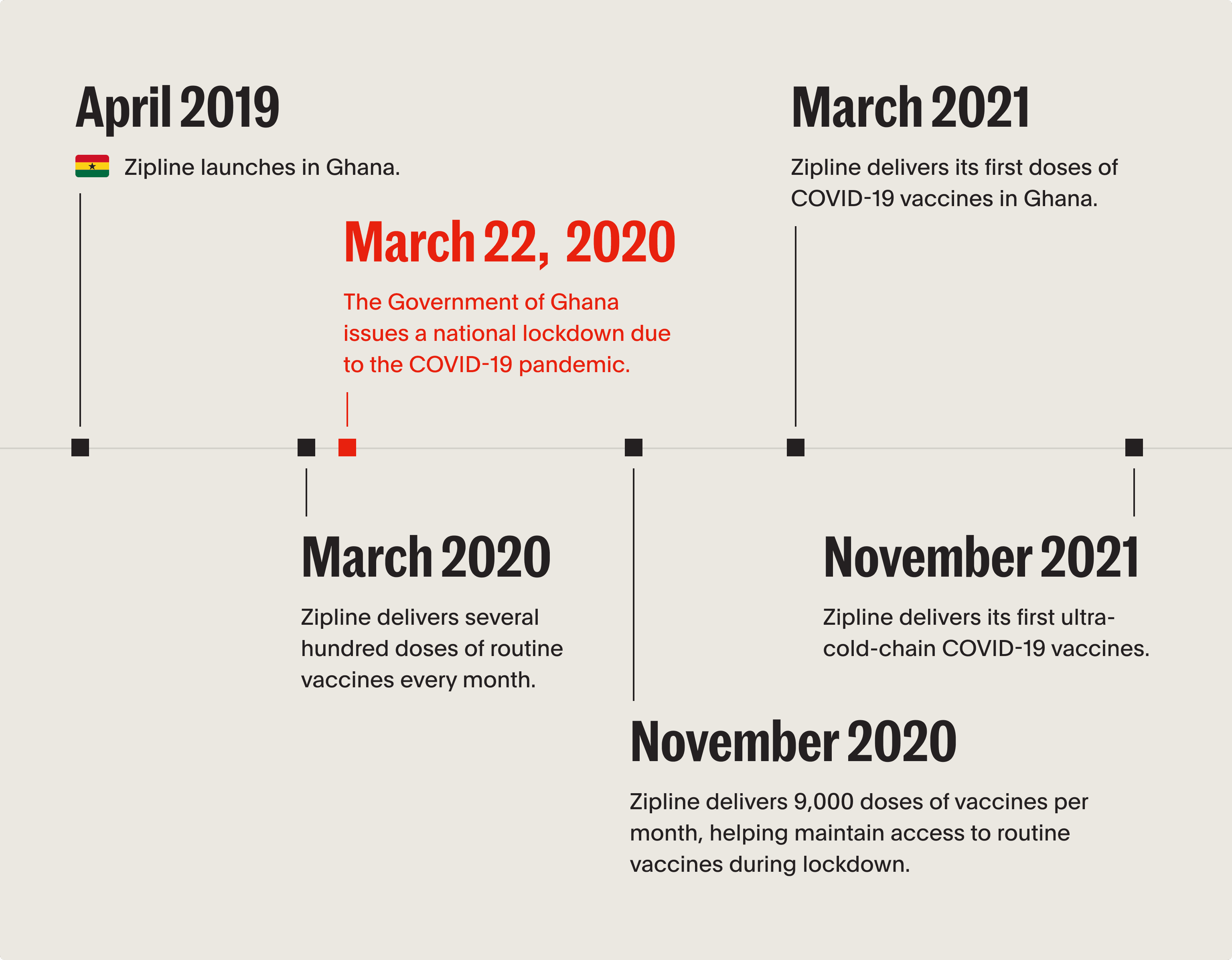
In 2019, Zipline partnered with the Ghana Ministry of Health and Ghana Health Service to deliver routine childhood vaccines. In 2020, demand for Zipline delivery of these vaccines surged as the pandemic slowed the traditional supply chain. In parallel, Zipline helped build the infrastructure to distribute vaccines against COVID-19.
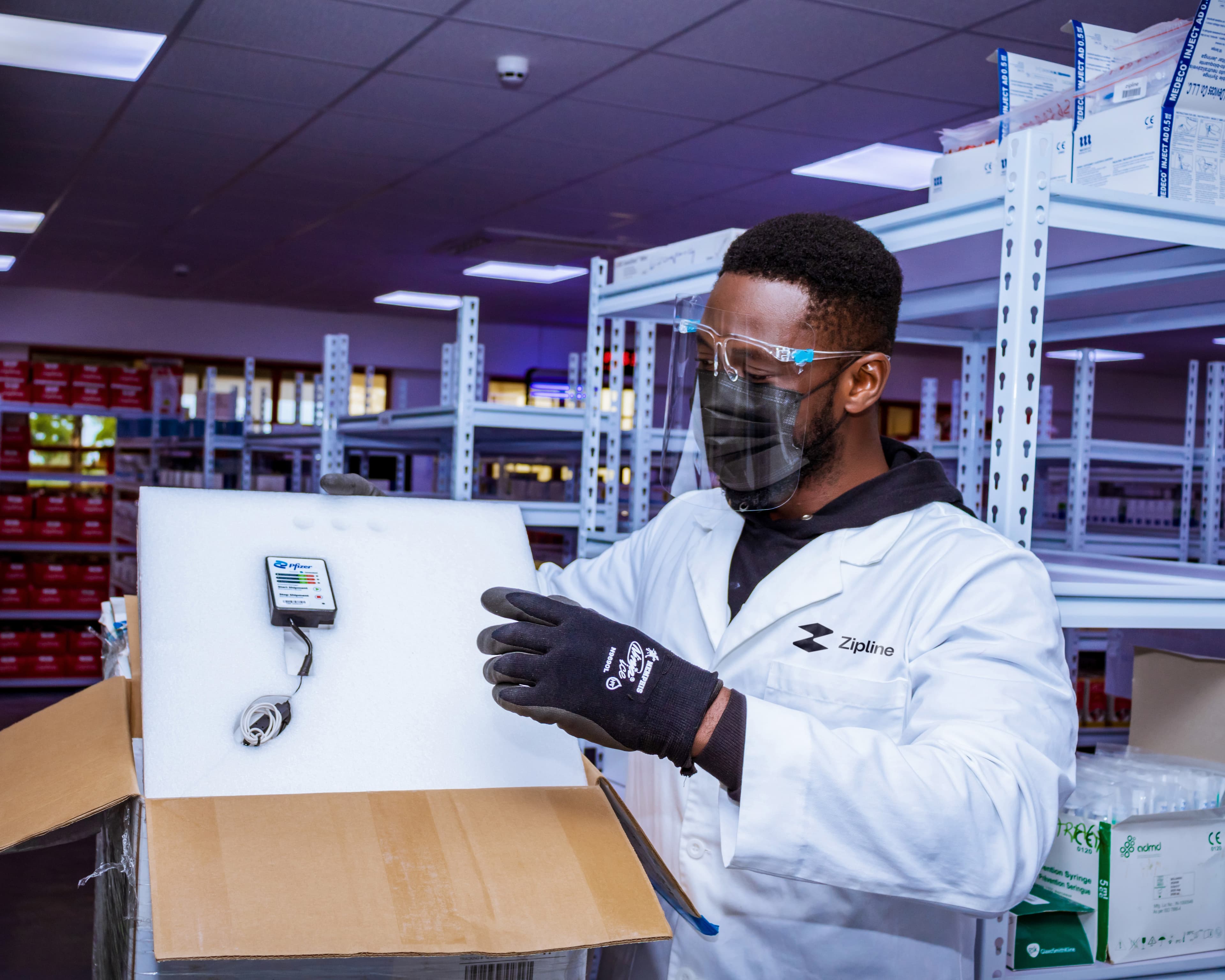
In March 2021, Zipline began delivering the first available COVID-19 vaccines in Ghana. That November, Pfizer approved Zipline’s supply chain to transport its ultra-low-temperature mRNA vaccine. With support from the UPS Foundation, Zipline began delivering the vaccine, which needed to be stored at sub-zero temperatures, to remote health posts around the country—many without reliable refrigeration—that otherwise couldn’t have kept it in stock.
Our impact
Today, the Government of Ghana has delivered more than 20 million doses of COVID-19 vaccines. Of those, Zipline has flown more than 2.8 million via drone.
The 2.8 million doses distributed by Zipline disproportionately reached vulnerable communities. The majority of the vaccines Zipline delivered in Ghana went to districts with a high proportion of households led by women, rural districts, and districts where people have limited access to safe water. Rural districts received 30% more vaccines from Zipline than less remote regions. Districts where most heads of household are women received 4.5x more vaccines than other districts. And those without access to safe water received 9x more vaccines than other districts.6
Importantly, more than a third of vaccines were delivered within a month of expiring. This meant that healthcare workers could protect people in communities against COVID-19 with doses of vaccines that, without Zipline, would have been destroyed.