The wild, wild nest
Zipline engineers go to extremes to make sure our aircraft can handle harsh temperatures. Here’s a look at our cold weather testing site in Wyoming.
At 2 AM on April 3, Gustavo Fujiwara watched water droplets suspended in the air turn into ice on the spinning propeller blades of a Zipline drone. He was thrilled—the data he collected could help Zipline bring safe, reliable drone delivery to people who live in extreme climates. And at an ambient temperature of -5 degrees Celsius, he was also cold.
People, machinery, and matter behave differently in extreme cold. Hands hurt and thoughts cloud. Ice turns to water and refreezes, expanding. Metal shrinks.
Despite the challenges, the benefit of cold-weather testing is huge. “When snowy and icy roads are too dangerous to drive and someone has an emergency requiring a life-saving product, that’s when people need us the most,” says Fujiwara, a staff aeronautical engineer at Zipline. Even without an emergency, cold-weather deliveries can improve access to everyday goods for people who live in areas with harsh winters.
For safe cold-weather deliveries to become commonplace, Fujiwara and a handful of other engineers have spent long hours at Zipline’s testing site, also known as a Zipline “nest,” in rural Wyoming.
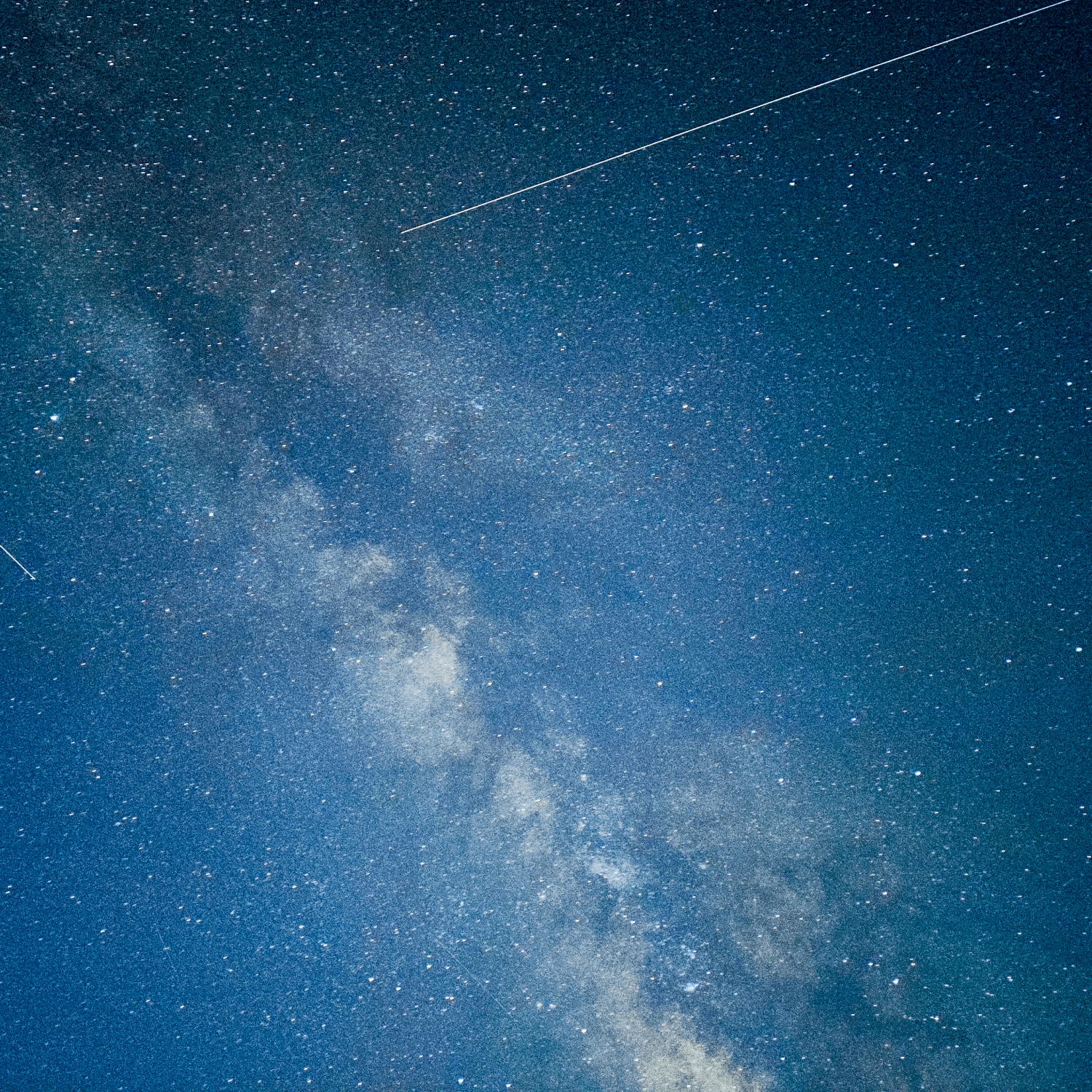
“There’s nothing really out there. It’s the Wild West,” says Michael Rigby, head of the test site, a location so remote that one team member used the opportunity to practice his night-sky photography far from sources of light pollution.
Rigby knows the area better than most, since his family is from a nearby town. His father, who worked as a potato farmer near the Wyoming border, “was the most creative man I’ve ever known when it comes to troubleshooting and fixing things,” he says, a trait that is useful for locals who live in the cold—and Zipline engineers on the frontier of drone testing.
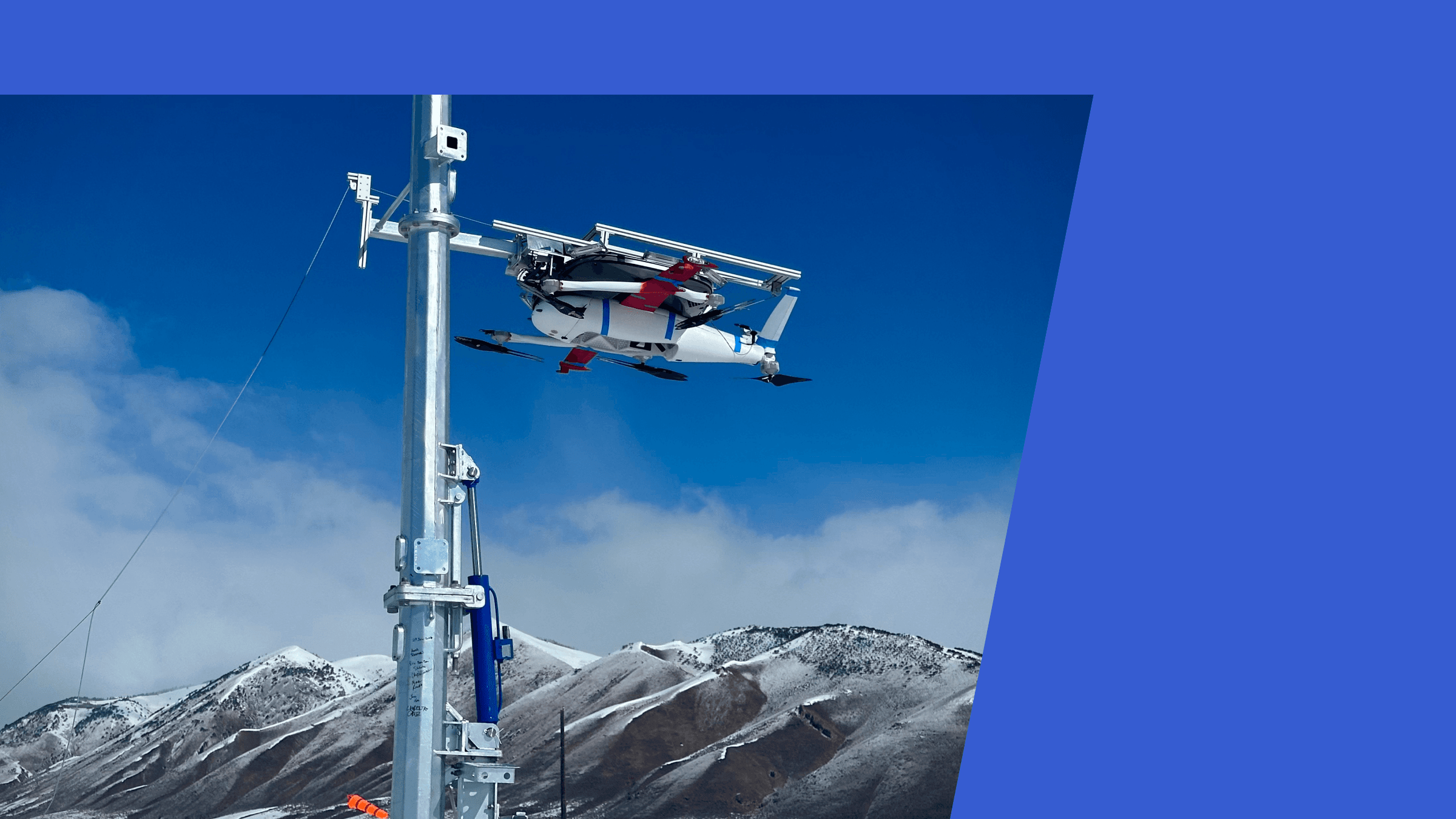
The site is a vital location for testing Zipline’s second-generation drone, part of its P2 platform. It sits on hundreds of acres owned by a couple who have been integral to the testing program’s success.
The landowner advised Zipline’s team on how to build crucial elements of a functioning test site, down to the septic system. “I told them portable septics weren’t going to work that great in the cold,” he says. “That’s a lot of frozen mass.”
Today, the site features a heated flight operations base, maintenance facilities, and docking towers—all built with help and guidance from the ranch owners, who’ve helped make sure it has everything Zipline needs for the coldest test campaign in the game.
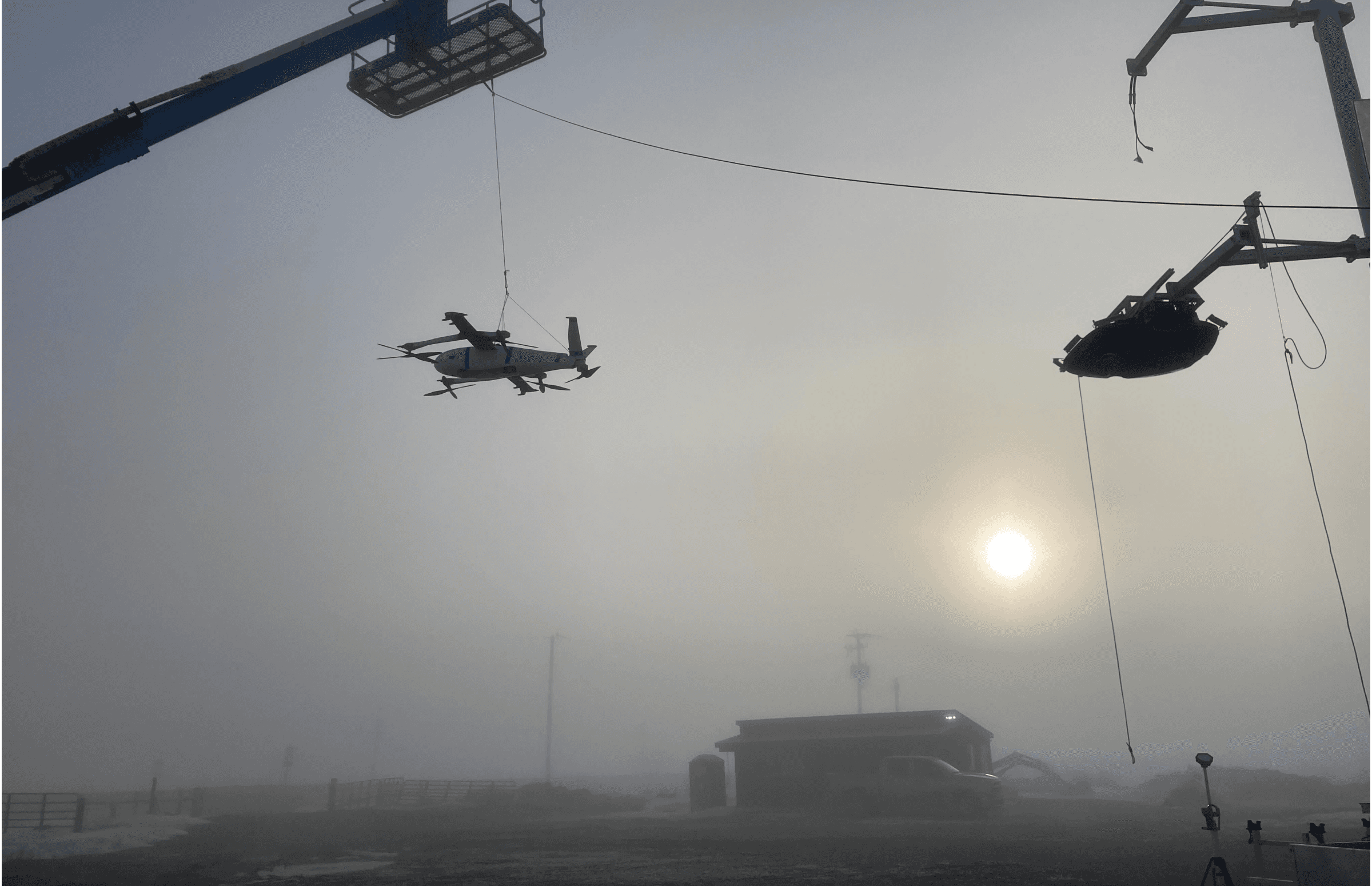
Zipline's cold-weather testing site features a heated flight operations base, maintenance facilities, and docking towers.
Breaking the ice
Icing is a major danger in aviation. It happens when water droplets inside clouds flash-freeze on surfaces of aircraft. It’s so dangerous that, when conditions are conducive to icing—when it’s both cloudy and cold—air traffic control grounds all commercial planes that aren’t specially certified for that kind of weather.
“Commercial aircraft have to be certified to fly in icing conditions,” says Fujiwara, one of only about 50 scientists worldwide who specialize in aircraft icing and aerodynamics. “That certification requires rigorous engineering design and flight testing.”
Fujiwara draws on over a decade of icing research experience in collaboration with NASA and the FAA. “It’s challenging to predict how ice accretion affects aircraft aerodynamics, then design the right safety mitigations,” Fujiwara says, due to a combination of complex physics and a lack of pre-existing icing data for small drones. But solving this problem by developing technologies to de-ice Zipline drones could contribute to safer skies for everyone in the aviation industry, he says.
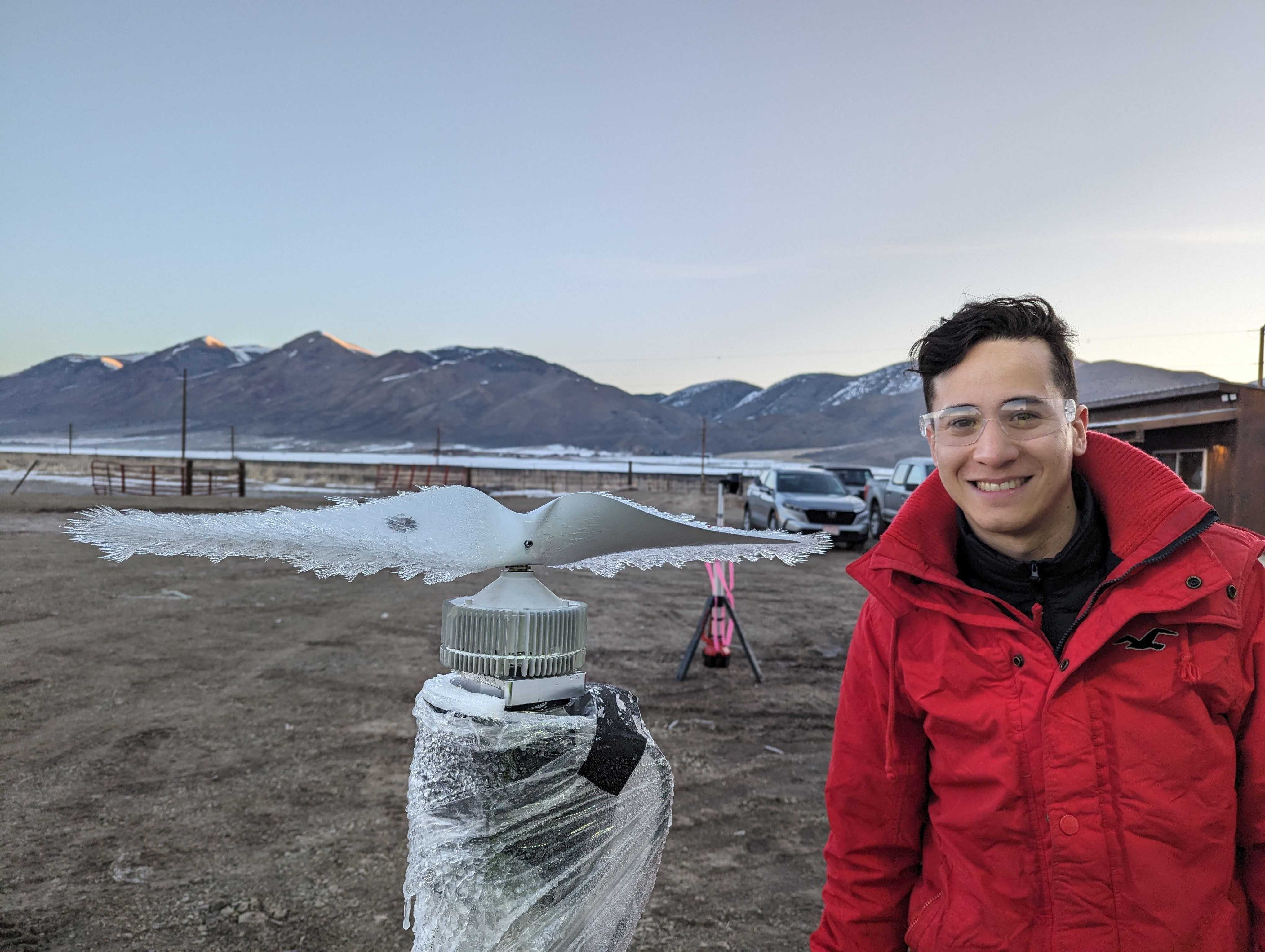
Zipline engineer Gustavo Fujiwara is one of about 50 scientists in the world who specialize in aircraft icing and aerodynamics.
Icing testing is difficult, in part, because the combination of extreme cold and low clouds is rare. To manufacture the right conditions for real-world testing, Fujiwara and aerodynamics intern Diane Scoboria rigged a fog machine on the ground and sprayed flight-critical pieces of the drone, like the propellers, with steady mist. They also had to test at all hours of the night, when temperatures dipped the lowest.
“We set our alarms to wake up at 9 PM, so we could work from 10 PM to 7 AM the next morning,” he says. “We were scrappy so we could get as much valuable data as we could when it was cold enough. We were basically chasing the weather.”
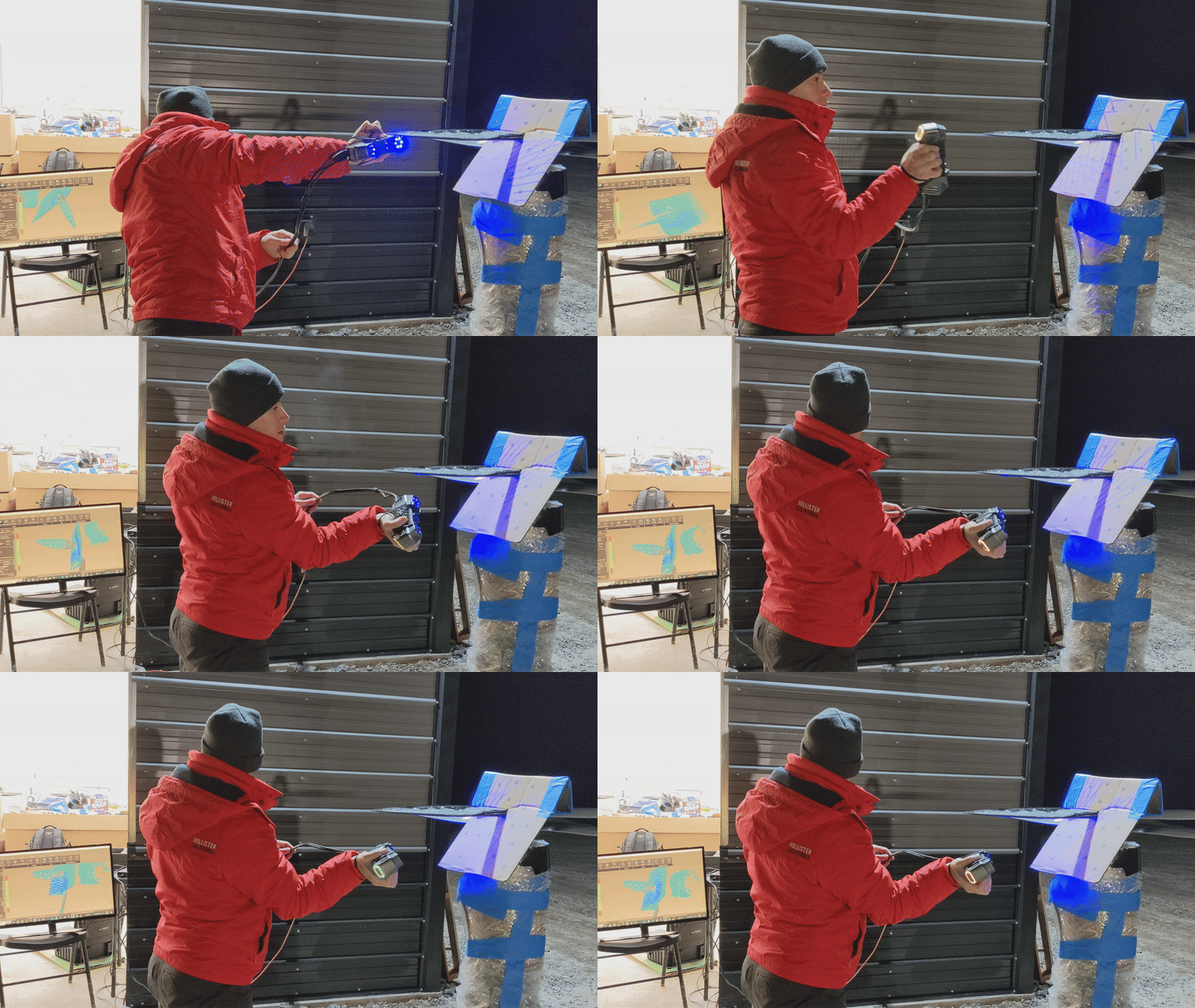
Fujiwara performing a 3-D scan of the propeller ice buildup after a cold-weather test in the middle of the night.
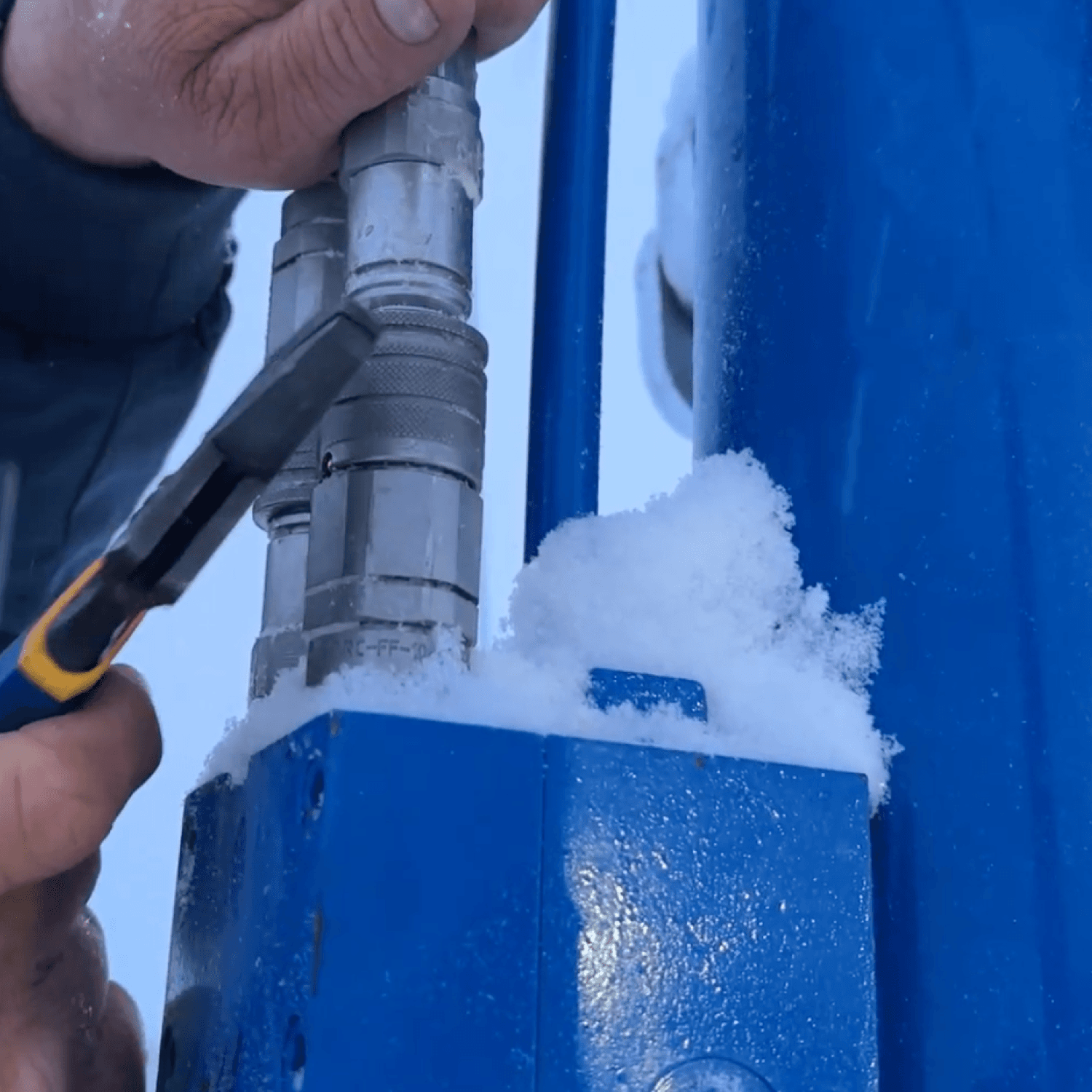
In addition to icing, Zipline’s cold-weather testing team checked the effects of ice and snow accumulation on the Zips and docking stations overnight, the ability for the batteries to stay warm enough to power Zips, how to keep motors from (paradoxically) overheating from spinning faster in thinner air, and, perhaps most importantly, how to create a system where humans can comfortably oversee and maintain drones in the freezing cold.
What we learned
The worst-case scenario for aircraft is that cold weather stresses hardware and software so much that, “when the temperature drops below freezing, everything falls apart,” says Bonaventure Mills-Dadson, a hardware reliability engineer. “But that’s not what happened to our Zips at all. While we found a few ways to improve in the design when operating in these conditions, we also discovered we’re already really robust.”
In fact, on clear, cold days, Zipline equipment behaved the way engineers predicted it would in simulation. The motors kept the drone aloft in thin air without overheating or straining the battery. The team also refined methods for clearing overnight accumulation of snow and ice on the drone and docking system.
The trickiest condition isn’t actually extreme cold, but rather temperatures that fluctuate above and below freezing. When that happens, frozen precipitation turns into water that can refreeze in nearly invisible gaps between parts of the drone.
“Sometimes we would realize that a design failure mode we weren’t initially tracking became significant under these conditions, especially during temperature cycling,” Mills-Dadson says.
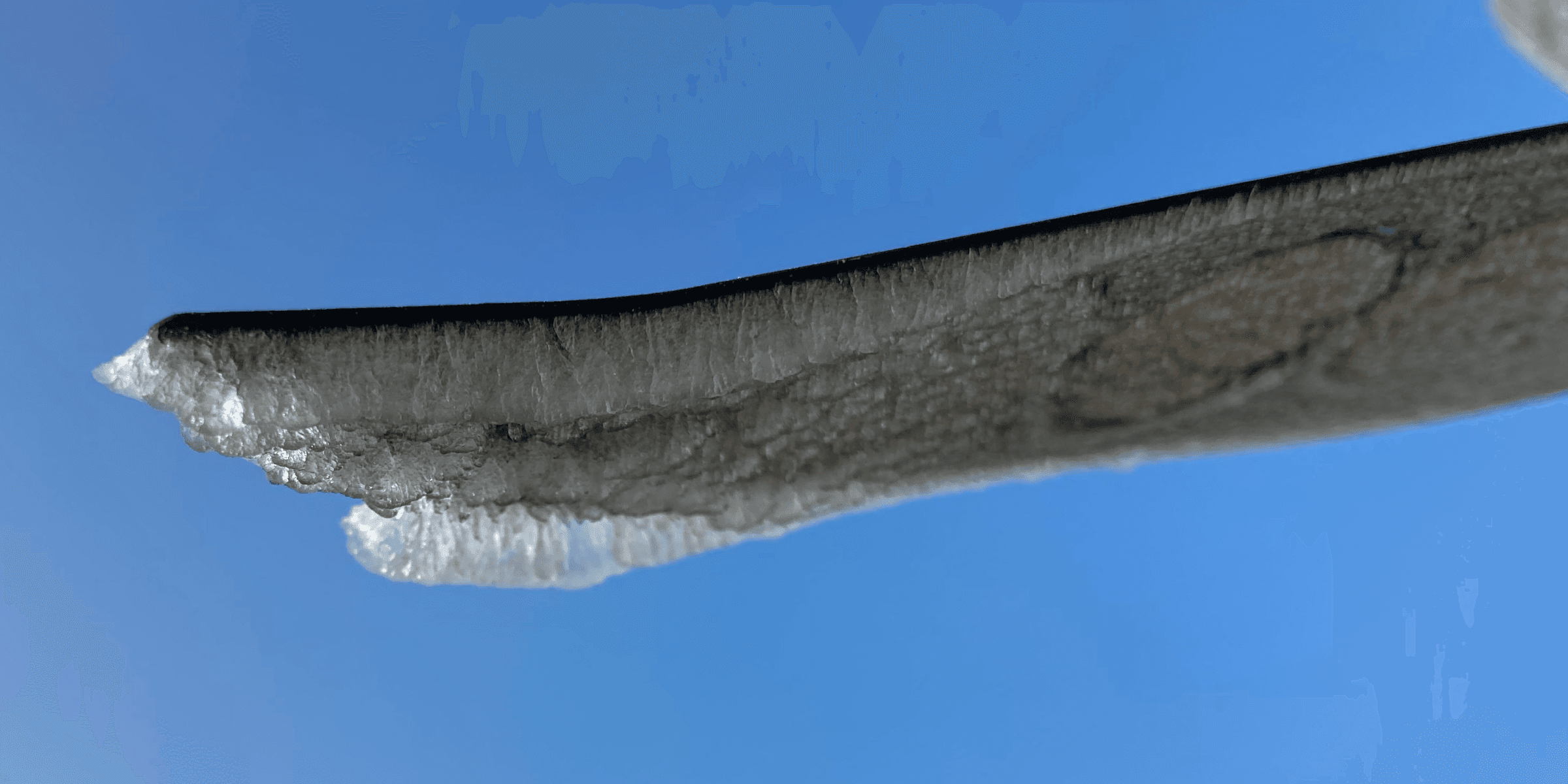
Fluctuating temperatures can cause ice to melt and refreeze in jagged formations.
Fluctuating temperatures also exacerbated the effect of icing. In very cold temperatures, ice tends to form in a pattern that extends the leading edges of aircraft parts such as the propellers, the nose cone, and the front of the blade of the wing. But in temperatures closer to the freezing point, ice can form large horn structures that have a more detrimental effect on aerodynamics, make the motors work harder to compensate for irregular, jagged shapes.
Beyond the frozen frontier
The team is working on ways to improve performance in icing conditions—developing engineering solutions to prevent and remove any ice that might build up on critical aircraft surfaces during operations.
They’re also working on protocols that seem basic, but will be crucial for sustained, extreme cold-weather operations. For instance, operators need good, warm gloves and custom tools to knock off ice and unjam equipment quickly. For one of the tests, “because of the nature of the measurement, people were taking their gloves off,” Mills-Dadson says. “I did it for 15 minutes and I was like, wow, this is painful.”
Zipline’s facility is also being used beyond cold weather testing. One day during the most recent test campaign, the Coast Guard was conducting tests that involved jamming GPS, which is one system Zips use to communicate with each other and the docks. While jammed, the team adjusted their testing plan on the fly to take advantage.
“We pivoted to testing scenarios without GPS positioning, which allowed us to continue flying and collecting valuable data,” Rigby says. “It also highlighted the importance of our approach, which builds in multiple redundant systems so we can adapt to issues we may encounter in the real world.”
Back at Zipline’s headquarters in San Francisco, Fujiwara is testing models of 3-D printed propellers based off of the exact ice formations he saw in real life at Zipline’s cold-weather nest. The rest of the team is sorting through the data, figuring out the true limits of Zipline technology in the cold, and the mitigation systems to make those limits as far out as possible.
At the site, the rancher and his wife are excited for the next round of testing, and the potential that some day, drone delivery could become commonplace in their community. “We’re really service-oriented people. We love Zipline’s mission and want to be part of a winning team. We feel like Zipline is a winning team,” she says.
“I just see this future where there are cowboys and drones,” she says, adding that, for her, that future is already here.
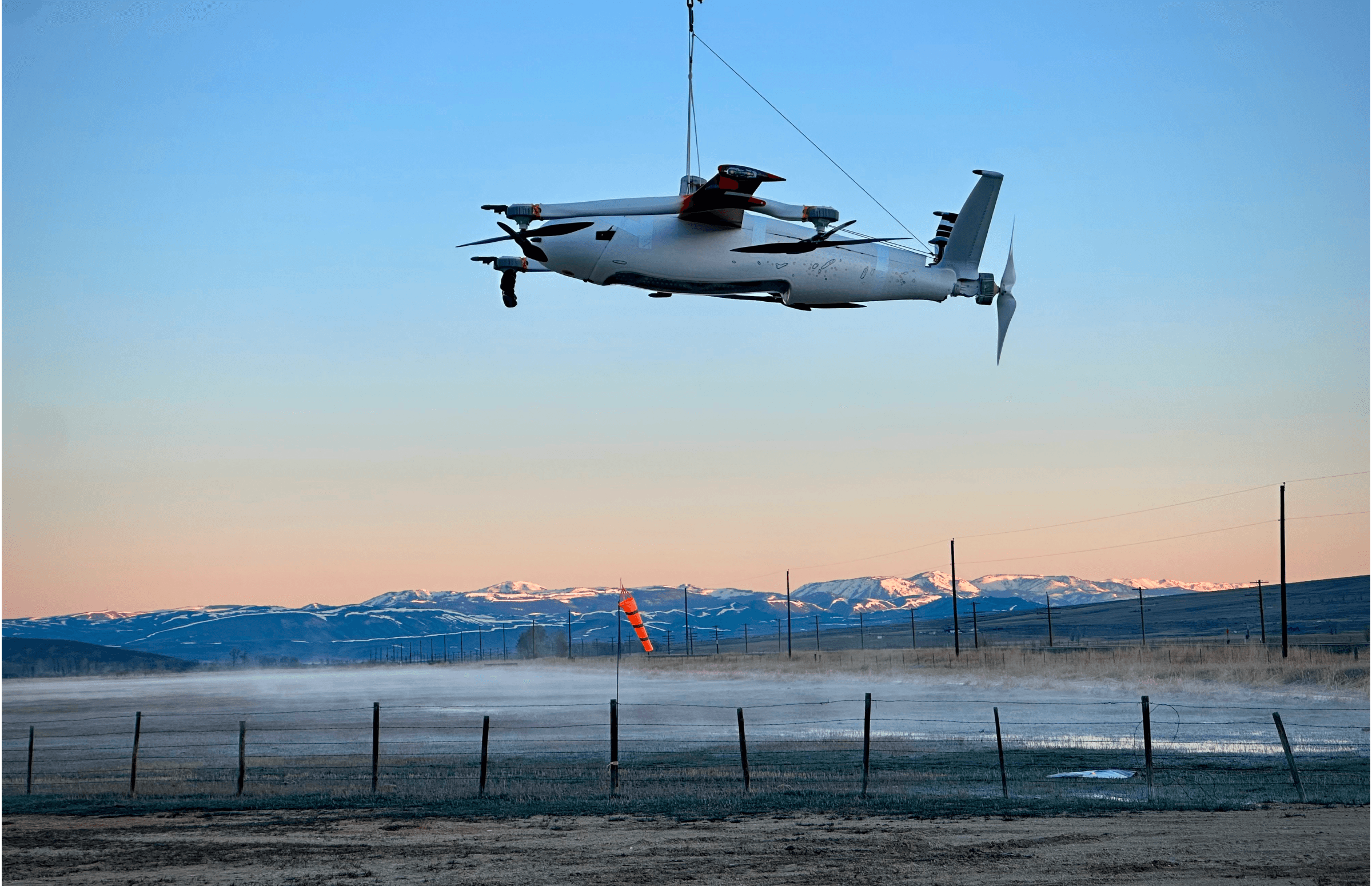
Zipline's P2 drone against the backdrop of a mountain range in Wyoming.