Why a million deliveries is only the beginning
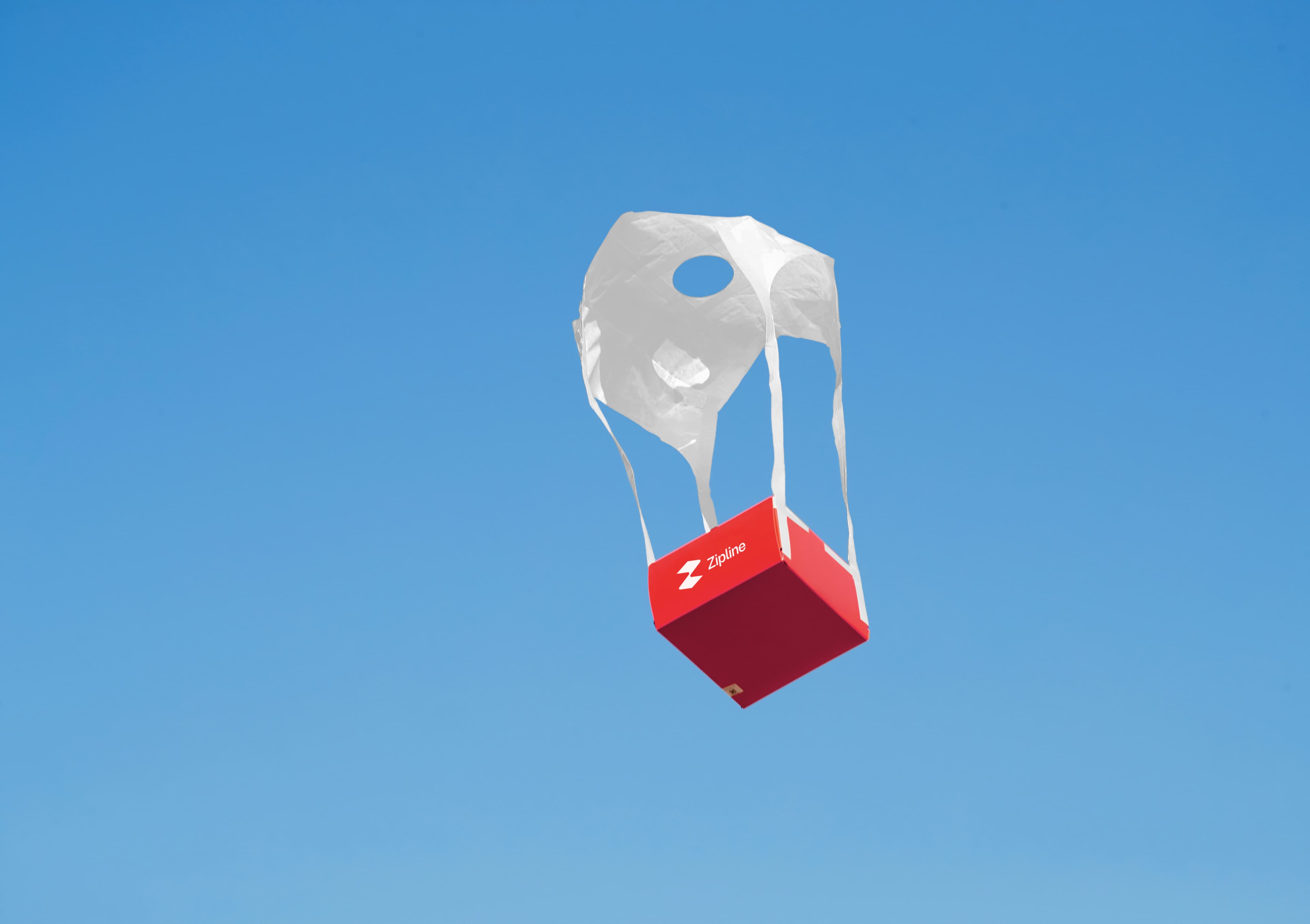
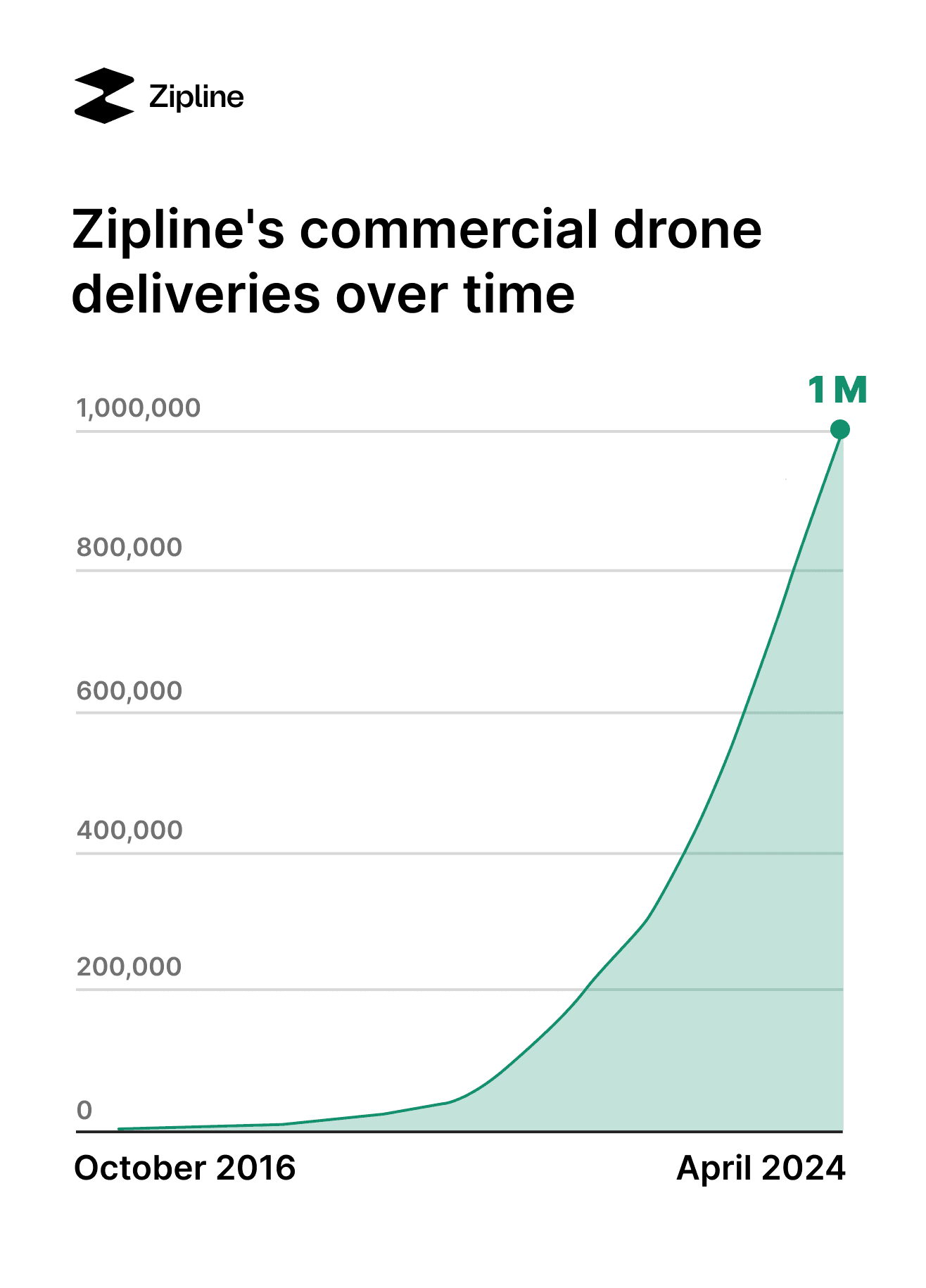
Today, Zip 856 carried two bags of IV fluid from Zipline's distribution center in Ghana's Western North Region to a local health facility. It was one of more than a thousand deliveries we made in the last 24 hours, but this otherwise ordinary flight marks a major moment for Zipline: our one-millionth commercial delivery.
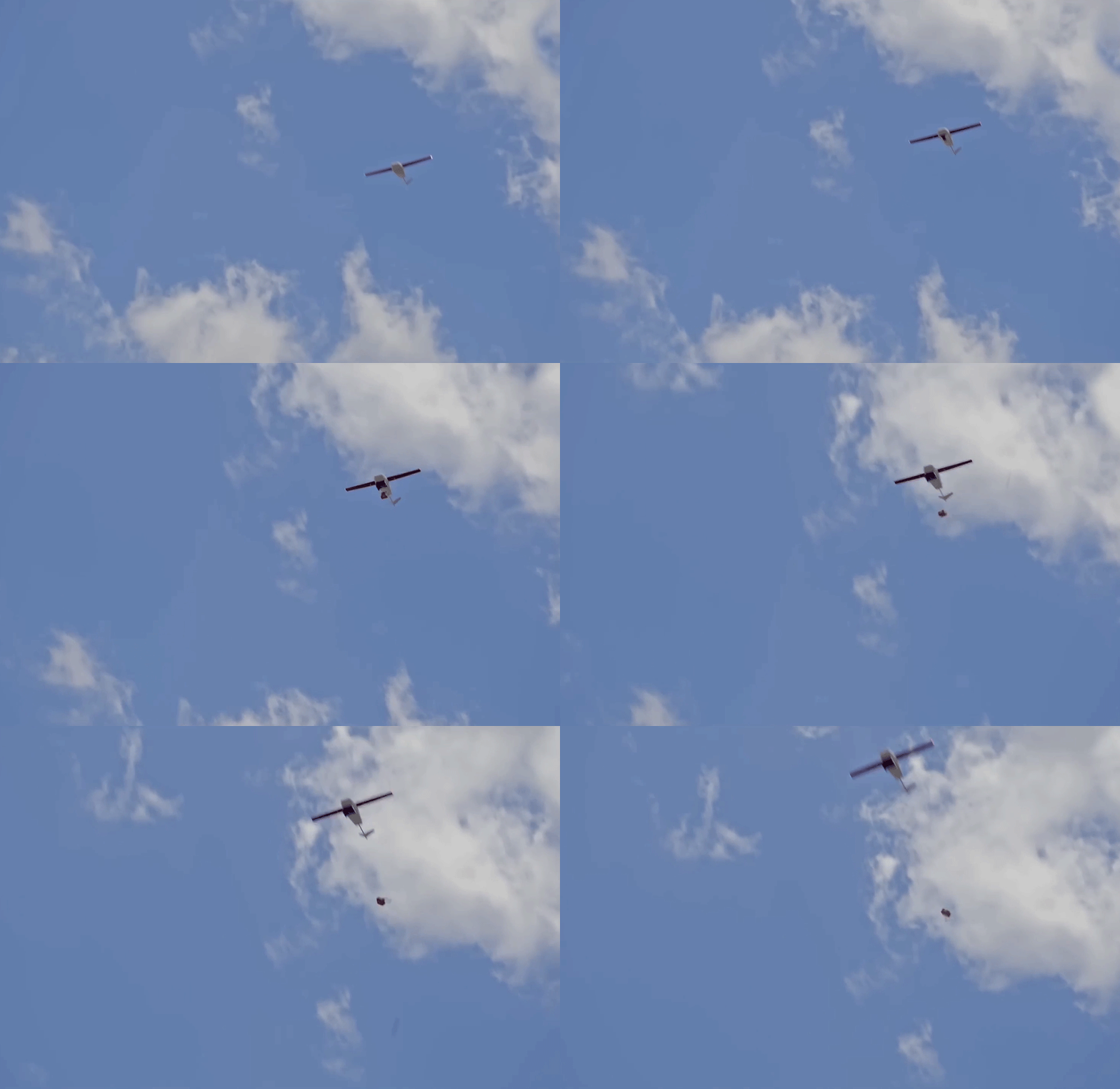
Ten years ago, in April 2014, we were just beginning to imagine how drone delivery could change the world. We saw traffic jams of gas-guzzling cars. We saw communities cut off from reliable access to supplies due to supply chain logjams, poor urban planning, difficult terrain or roads washed out from floods. We knew there had to be a better system to get people the things they needed. There’s no way the future would look like this.
So we got to work. Two tireless years later we made our first big step towards this vision: in October 2016, we started flying daily blood deliveries to two hospitals in Rwanda. In those early days, we were struggling. We often spent hours debugging just to launch a single delivery. Once in flight, everything had to go right to stay aloft. Our Zips had to navigate through Rwanda’s torrential thunderstorms and mountainous terrain. But day by day, we worked the problem, got airborne, and delivered to doctors who quickly grew to depend on us. We added a few more hospitals, rolled out new software each night, and refined each component of the system. We stayed heads down in this mode for weeks, months, years.
Then, one calm spring day in 2018, I remember waking up in California to see our team in Rwanda had made 21 deliveries while we had been sleeping. There were no delays, no middle-of-the-night Zoom calls to remotely troubleshoot, no delivery failures. Suddenly, years of hardcore engineering paid off, and it felt like the first time we weren’t pushing a rock uphill. We’d made it to the top of our first peak, looked out, and saw our wild vision might actually be achievable.
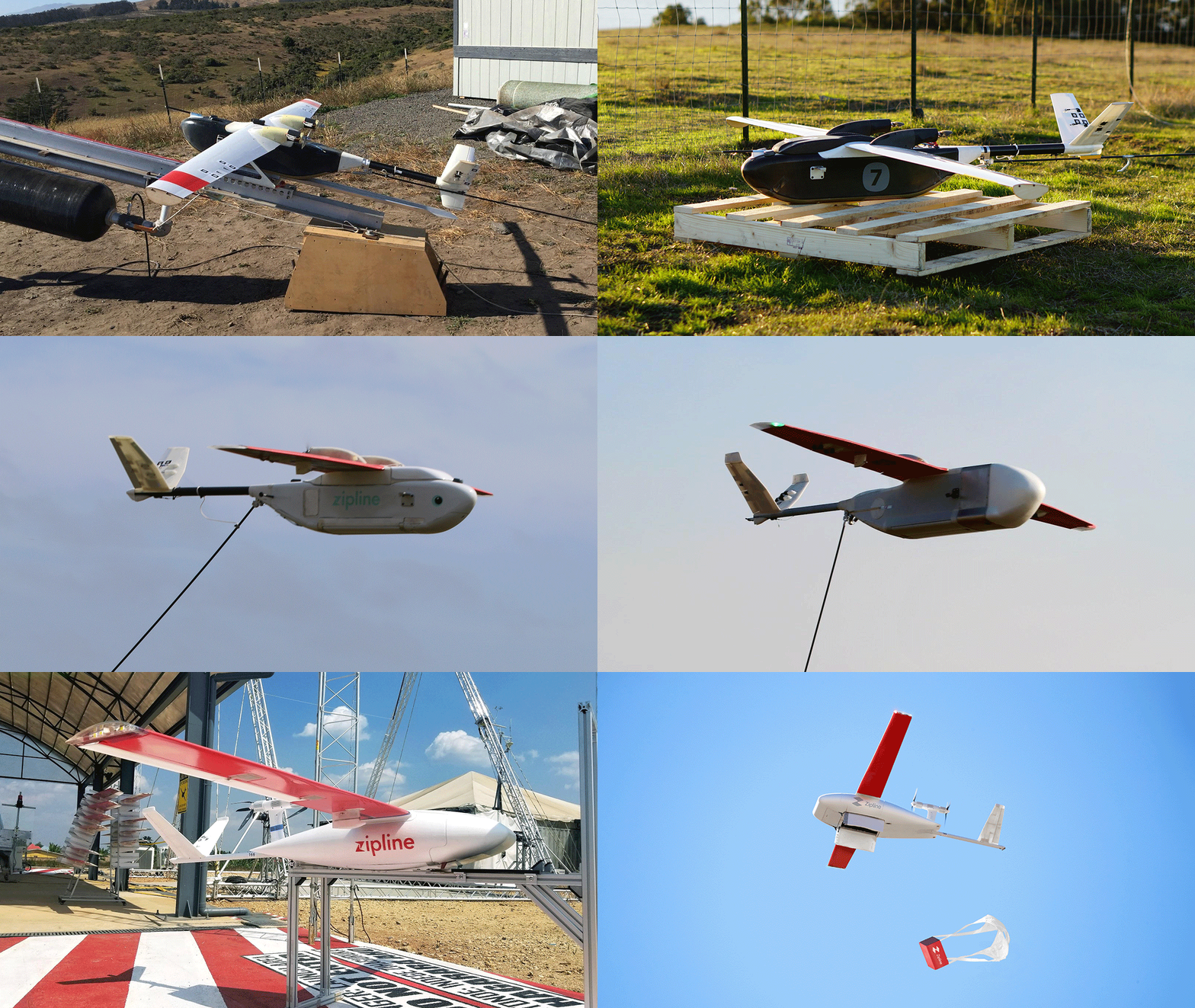
Fast-forward to 2024. Many more peaks traversed. Generations of Zips later, busy Zipline distribution centers now can launch thousands of flights per day, seven days a week through all weather conditions. After seven years of non-stop service, we’ve racked up more than 70 million commercial autonomous miles from 19 distribution centers on four continents. That’s nearly three thousand laps around the planet and more than 120 years of autonomous flight hours by a human pilot. Our first peak of 21 deliveries in a day is now achieved every 10 minutes on a busy day.
This technology is proven and scalable, free of carbon emissions, human pilots, and expensive ground infrastructure like highways or rail. By flying through nearly limitless skies, we’ve been able to expand across entire countries to rapidly become the world’s largest autonomous system, leapfrogging autonomous cars in total service area, fleet size, and distance traveled.
Every year, we’ve made more deliveries, built more distribution centers, delivered more types of products, and served new populations. We’ve maintained our rate of innovation so that, like a flywheel, every improvement in our performance, reliability, cost effectiveness, and range doesn’t just enable one or two more deliveries, it doubles, triples, or ten-xes the number of deliveries we make.
Numbers this large are often hard to internalize. Each individual delivery is making an impact and, at our scale, the cumulative impact is measurable. Our emergency blood deliveries have helped reduce maternal mortality rates in Rwanda by 51%.
Our ability to reliably race temperature-sensitive snake bite antivenom to farming communities in Ghana prevented death or illness for thousands of people. In Kenya, we bring tens of thousands of people stigma-free HIV/AIDS education, prevention, and treatment supplies. Our system is helping vaccinate zero-dose children across Nigeria. In 2023 alone, we delivered 1.5 million doses of vaccines to children in the country, the vast majority of whom never would have been immunized without Zipline. In the U.S., we enabled parents with sick children to order food and medicine directly to their homes, and in Japan people have been getting sushi and bento boxes, among other items, delivered via drone.
A better, cleaner logistics system matters for everyone. Whether it’s someone driving a delivery vehicle through a packed metropolis, a truck in the country, or an electric vehicle in the suburbs, people all around the world are driving big vehicles to transport a burrito or a prescription or a cooler of vaccines. These trips, in aggregate, take a tremendous amount of time, money and energy.
Imagine a world where people don’t need to make long treks to get what they need; where healthcare providers no longer have to decline patients because they are out-of-stock of critical medicine; where patients can get cold-chain chronic care supplies such as insulin delivered directly to their homes. In this world, people no longer have to choose between a last-minute grocery run and more time with their loved ones. Imagine if everyone had all the time back that they currently spend burning literal and mental fuel running one-off errands. The value of all of that collective time saved is almost incalculable.
More than a million times, Zipline has made a faster, more efficient, and environmentally sustainable delivery. This has prevented the equivalent of 472,000 hours of driving and eliminated more than 6,000 tons worth of carbon emissions—the equivalent of planting more than a hundred thousand trees and growing them for a decade.
These 1 million deliveries have mattered. They represent a massive amount of work from everyone at Zipline. Soon, that number will be unremarkable as we reach a million deliveries in a year, in a month, in a day. And before long, clean, reliable autonomous delivery will be available to even you.