Africa CDC and Zipline Partner to Advance Health System Responsiveness and Epidemic Preparedness Across Africa
They will expand access, improve emergency preparedness, strengthen data systems, and enhance epidemic response.
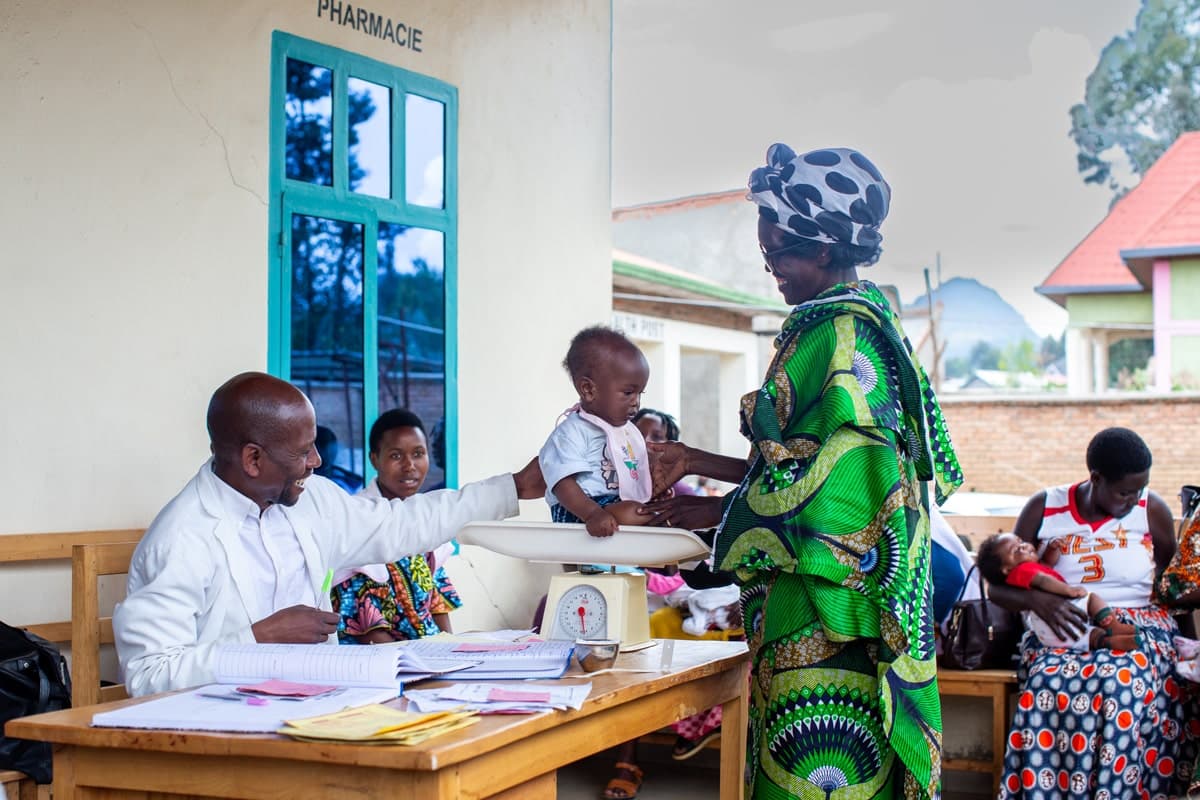
Imagine the edge of a small farming community in rural Africa, a nurse starts to notice something unusual: a cluster of fevers, respiratory cases that don’t quite fit, a pattern that feels concerning enough to pay attention.
She faces weeks — or months — of waiting. She doesn’t have a way to get lab samples tested quickly, or to access information about whether similar clusters of symptoms are popping up in other places. She records things on paper ledgers that no one else can see. Her health system will largely rely on healthcare workers across the country manually inputting data into a system once a month, accurately and on time, and hoping a system administrator detects a pattern at best a month or two later.
By then, a local problem could become a national and even international emergency. That has been the pattern for nearly every global pandemic, including Covid and HIV/AIDS.
This partnership is designed to close that gap.
Today marks a major milestone for public health in Africa to change that familiar and frustrating paradigm. Zipline and the Africa Centres for Disease Control and Prevention (Africa CDC) have signed a Memorandum of Understanding (MoU) to strengthen epidemic preparedness, expand access to care, and modernize the continent’s supply chain and data infrastructure.
Under the new MoU, the moment that a nurse logs a case, the system responds. Medical products and diagnostics can be launched by Zipline within minutes to address immediate health needs and shuttle diagnostic tests to any potential hotspot. At the same time, that simple request becomes part of a real-time national picture, feeding into data systems that help leaders detect emerging trends early and act even earlier.
It is logistics, surveillance, and response — finally connected.
A Vision Led by Africa
Africa CDC’s Strategic Plan and the New Public Health Order lay out a bold path forward to ensure that health systems that are resilient, technologically advanced, equitable, and fundamentally African-led. This MoU accelerates that agenda by integrating autonomous logistics into national supply chains, strengthening disease surveillance, building workforce capabilities, and supporting emergency preparedness across Member States.
Zipline is honored to be part of that work. Over the past decade, we have partnered with African governments to expand access to essential health products and to build the evidence base for what is possible. Visionary philanthropic partners — including the Elton John AIDS Foundation, the Gates Foundation, Gavi, the Pfizer Foundation, and The UPS Foundation — have played a critical role in this effort, helping countries study, measure, and prove the impact of modern health logistics.
Their leadership has shown the world what is possible when bold governments and bold funders work together. And because of their commitment, researchers now have clear evidence that modern, autonomous delivery systems can dramatically improve care, strengthen health systems, and expand health equity at scale.
A New Model for Connected Health Systems
The MoU signed today builds on that momentum. Working together, Africa CDC and Zipline will help countries better prepare for outbreaks, strengthen real-time data systems, modernize supply chains, and train the health workforce needed to operate these systems sustainably. This work will be done with a shared commitment to equity, sustainability, transparency, and innovation.
This is not simply the signing of a partnership. It is the start of a continent-wide effort to ensure that every community has reliable access to care, and that national leaders have the information they need to detect and respond to health threats before they escalate.
A Call to Donors: Invest in the Bridge to Sustainability
Achieving this vision will require more partners who are ready to lean in.
This is a moment for donors to step forward — not indefinitely, but strategically — to help African countries build the bridge to long-term sustainability. Investments in early infrastructure, workforce development, data systems, and operational research will enable countries to scale these innovations more quickly and embed them into national systems over time.
We applaud donors like the U.S. Department of State for their bold vision, smart strategy, and swift execution of a recent award that supports Zipline’s rapid expansion — a powerful first step toward building the connected health systems Africa deserves.
Improvements that Keep Getting Better
The promise of this MoU is not hypothetical. Across Rwanda, Ghana, Nigeria, Kenya, and Côte d’Ivoire, Zipline and its partners have already demonstrated what is possible when health workers gain real-time access to supplies and data.
In Rwanda, for example, the Ministry of Health now integrates information from product movement, patient care, and disease trends into a single, real-time national dashboard. Zipline’s system feeds directly into that infrastructure, giving leaders a live view of how the health system is performing and where health events may be emerging. This kind of visibility enables faster decisions, smarter resource allocation, and stronger protection for every Rwandan.
This is the future of public health: systems that see early, move early, and respond early.
A New Chapter for Africa’s Public Health Systems
The MoU between Africa CDC and Zipline represents a significant step toward that future. It aligns with a transformative vision for a healthy, self-reliant Africa, one that is driven by innovation, equity, and African leadership.
Zipline is ready for the work ahead. Together with Africa CDC, Member States, and partners around the world, we are committed to building a modern public health system that protects every community and fundamentally reshapes the trajectory of health and economic development across the continent.
As we look ahead, we return to the nurse in that rural clinic, the quiet sentinel at the front line of Africa’s health system. With this partnership, she is no longer responding alone. She becomes part of a modern, connected public health system — one that sees early, moves early, and protects communities before lives are lost. That is the promise of this work.