Bold ideas, Local solutions: Zipline’s investment in community-led research
We believe the most powerful solutions come from within the communities we serve. That’s why in 2022, we started working with the University of Rwanda (UR) to create funding opportunities to support local research.
This year, through a $10,000 grant, we’re empowering students to explore solutions that address critical healthcare challenges in Rwanda. Projects funded by the Zipline and UR Research Grant are not just academic—they serve as catalysts for economic empowerment, capacity building, and locally-driven innovation.
Turning Research Into Impact
In Rwanda, one team is researching how to optimize vaccine distribution through aerial logistics, overcoming barriers to resupplying rural health posts. The study seeks to evaluate models to enhance vaccine availability and health outcomes in resource-limited settings. The research team includes Gislain Ineza, Olivier Niyonkuru, Etienne Numviyumukiza, Cynthia Ineza, Christa Mikamiro, and Madeleine Mukeshimana.
Another team is exploring how aerial logistics can enhance epidemic preparedness and response in Rwanda, using lessons from the COVID-19 pandemic to manage Marburg virus disease outbreaks more effectively. Their study examines how drone technology can be leveraged within national healthcare strategies to improve response to emerging infectious diseases. The research team includes Vainqueur Ineza Habyarimana, Samuel Niyomuremyi, Placide Niyonshuti Shema, and Richard Nduwayezu.
Why Locally-Led Research Matters
When researchers come from the communities they aim to serve, their solutions are uniquely informed and deeply rooted in local realities. Through this partnership, Zipline and UR are fostering innovation that aligns with the needs of Rwandan communities, ensuring every project is both impactful and sustainable.
This initiative also drives economic empowerment and builds local capacity, creating opportunities that extend beyond healthcare. By facilitating thoughtful exchanges between Zipline’s research team and university students, these projects are laying the groundwork for long-term resilience and self-sufficiency, strengthening institutions, and fostering new models of collaboration between the private sector and academia.
Taking this Vision Forward
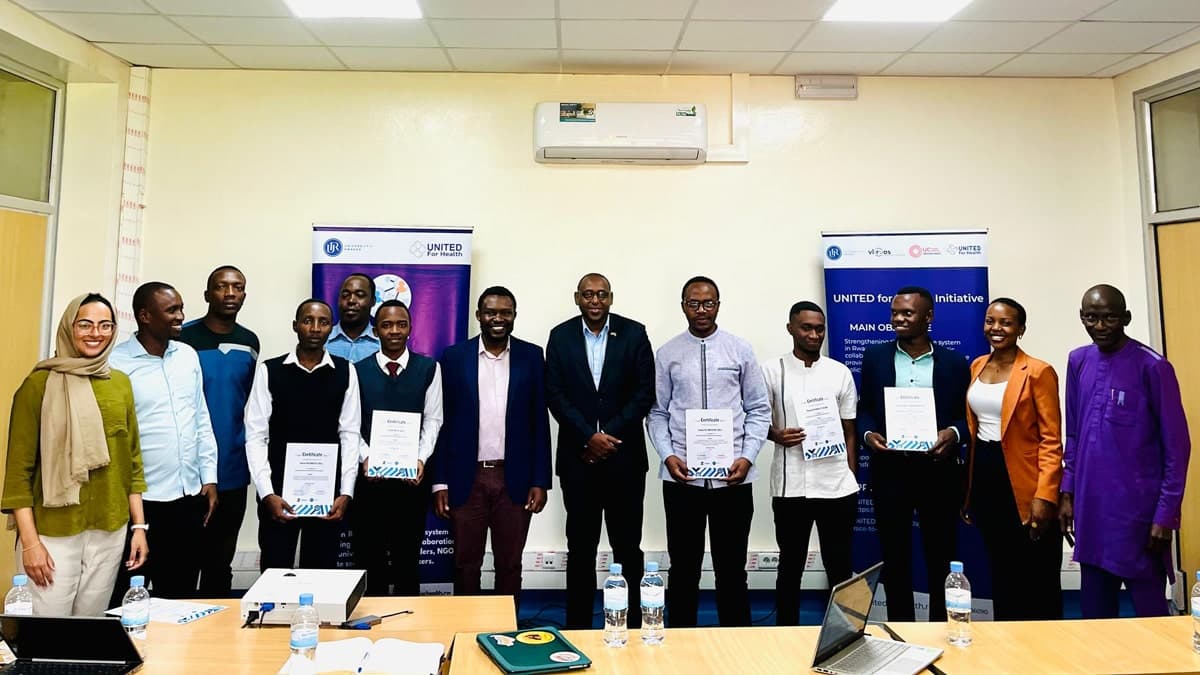
This week, Zipline and UR are awarding certificates to the selected research teams. Grant funds will be disbursed over the course of the year, and research projects are expected to be completed within 6 to 12 months.
The combination of Zipline’s pioneering logistics with UR’s academic leadership is a powerful demonstration of how innovation, when guided by local expertise, bridges critical gaps, empowers communities, and delivers sustainable solutions that transform health systems and lives.