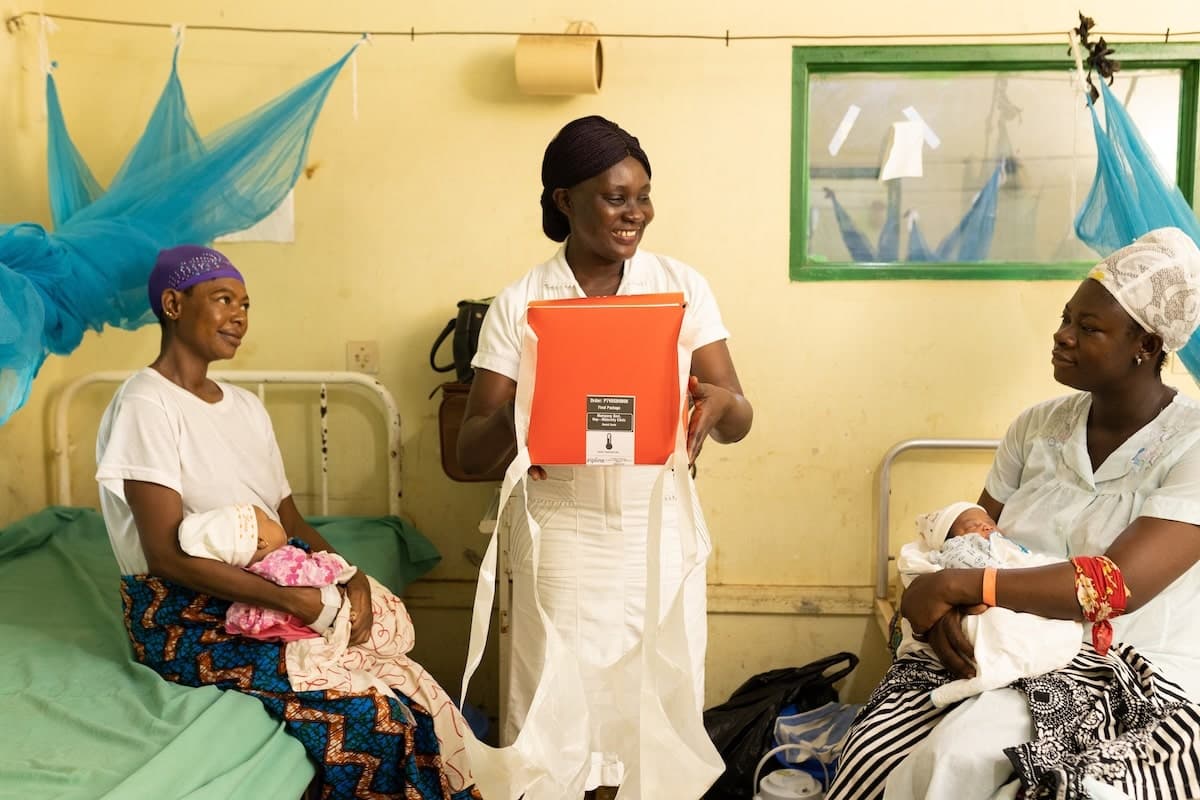
Delivering trust: How Zipline and Ghana are strengthening faith in the health system
Postpartum hemorrhage (PPH) remains one of the most preventable causes of maternal mortality worldwide, yet it claims thousands of lives each year. In Ghana’s Ashanti Region, where emergency care is often delayed due to logistical challenges and supply shortages, these setbacks cost mothers their lives. Thanks to a partnership between the Ghana Ministry of Health, the Ghana Health Service, and Zipline, the tide is turning.
A newly published study––coathored by Zipline and the Ghana Health Service (GHS)––examining the impact of Zipline’s drone logistics system on maternal health in the Ashanti Region, reveals a 56.4% decrease in maternal mortality at facilities served by Zipline (compared to those not served by Zipline).
A Newfound Confidence in Health Facilities
For many women in the Ashanti Region, accessing healthcare used to be an expensive and uncertain gamble. One mother vividly recalled:
“Sometimes they give you the wrong medication at the drugstore, and other times you may not have money for transportation to get the right one. But when I come here, they know exactly which medication to give me.”
Women are now seeking care with greater confidence, certain they will receive the right treatment. This has led to the notable 25% increase in facility-based births, a sign of growing trust in the healthcare system. One mother, who had faced complications in a previous pregnancy, shared:
“I was feeling dizzy, and the staff immediately checked my vitals and treated me. I don’t know what would have happened otherwise. Now, I know they have what I need, and I feel safe coming here.”
Bridging the Gap in Maternal Healthcare
Despite these advances, challenges persist. Rural areas in Ghana still see significantly fewer skilled birth attendants compared to urban settings. While nearly all mothers in wealthier households complete at least four antenatal visits, only 76% of those in the poorest households do. Similarly, while 97% of births among the wealthiest families are attended by skilled professionals, this figure drops to 47% for the poorest.
Zipline and the Ghana Health Service are committed to ensuring no mother’s access to care is determined by her income or location. By making critical medicines available in even the most remote areas, they are narrowing this gap and offering women the reassurance that they will be treated promptly and effectively.
Before Zipline, a midwife recalls the strain of accessing critical supplies:
“We would have to send patients far away just to find blood. But with Zipline, we can treat emergencies here and now.”
This ability to manage PPH and other obstetric emergencies without delay has given expectant mothers the confidence to seek care, knowing they will not be turned away due to stock shortages.
The Linkage Between Reliable Supply and Attendance
The crux of this research goes beyond emergency care, because it also shows a 19.9% increase in antenatal care visits, and a 25% increase in facility-based births. The reason maternal deaths decreased substantially is because, as the study data indicates, women sought care more often. Perhaps not as intuitively, the driver for this was the consistent availability of essential supplies, made possible by the Zipline and GHS partnership.
Simply put, reliability of supply fosters greater trust in the system, causing increased attendance––more women seeking in-facility care––which in turn leads to fewer maternal deaths. Zipline’s integration in the Ashanti Region has fundamentally transformed the way patients think about interacting with the health system, in a way that few other interventions have been able to do.
Zipline’s influence also extends beyond maternal care, to emergency treatments for severe malaria, snake bites, and other life-threatening conditions. A 2022 study by IDinsight confirms that 66 percent fewer patients miss treatment for severe malaria due to faster and more dependable medical deliveries by Zipline. Communities that once hesitated to seek care due to supply shortages now trust their local health centers, knowing they will receive timely and effective treatment.
A Model for the Future of Public Health
As global supply chains face ongoing disruptions, local resilience is key. Ghana’s focus on modernizing healthcare through technology sets an inspiring example for the rest of Africa—one where investments go beyond quick fixes, ultimately building a self-sufficient system that serves everyone.
By turning to Zipline, Ghana’s Ministry of Health and the Ghana Health Service have not only saved countless lives but also strengthened the entire healthcare infrastructure. The success story unfolding in the Ashanti Region is just the beginning of what’s possible when technology is applied to fix long-standing health challenges.