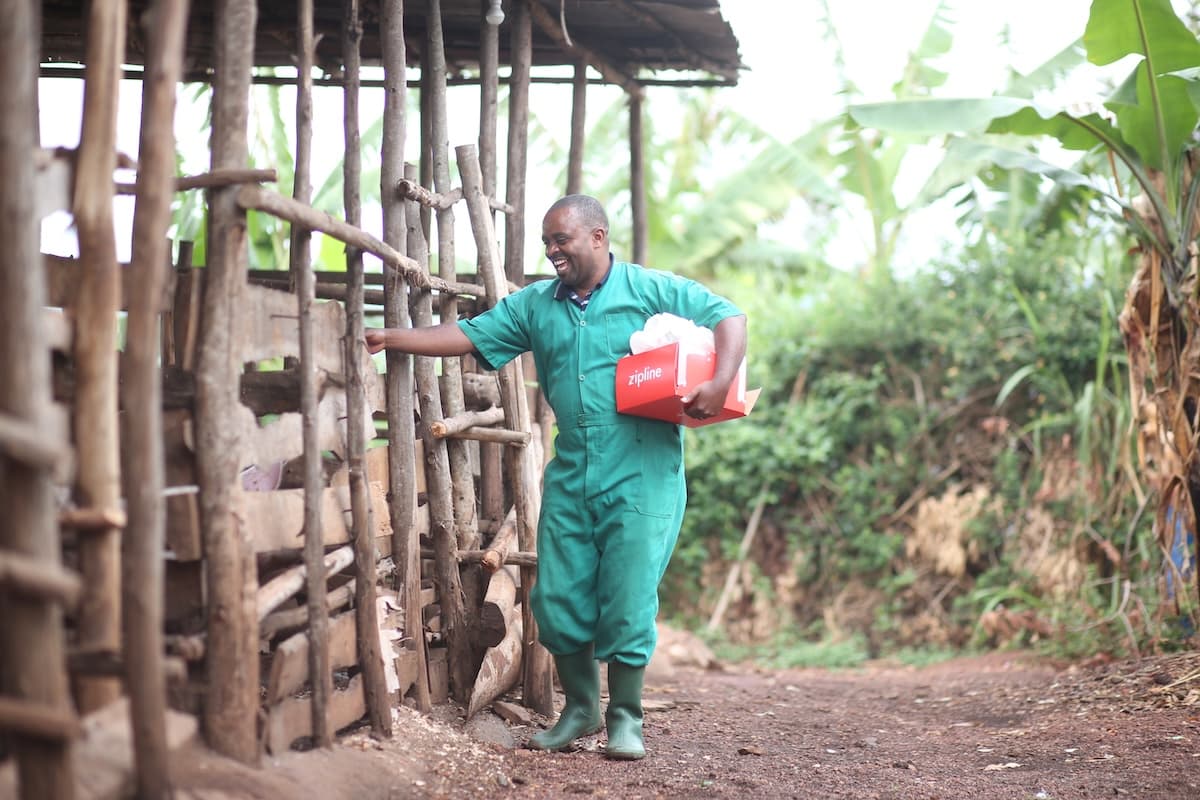
Revolutionizing agriculture in Rwanda: Zipline’s impact on animal health
Across the lush, rolling hills of Rwanda, small-scale farmers labor tirelessly to sustain their families and communities. Healthy animals mean stable incomes, food security, and stronger communities. But for many, accessing essential veterinary services—like artificial insemination (AI)—has been a long-standing challenge due to logistical barriers and limited resources. That’s where Zipline comes in.
Empowering Farmers with Better Artificial Insemination Services
In October 2023, Zipline partnered with the Rwanda Agriculture and Animal Resources Development Board (RAB), Land O'Lakes Venture37 and U.S. government agencies to integrate its drone delivery system into an agricultural project spanning eight districts. The objective was simple: use drones to improve access to artificial insemination (AI) services in the country.
For farmers, this shift was game-changing. Traditional veterinary supply chains struggle to reach rural communities, and swine semen is both time and temperature sensitive. Delays in transportation or suboptimal storage conditions can significantly impact fertilization rates. Before Zipline, securing AI inputs meant traveling long distances to veterinary centers on unreliable roads, with doses often arriving late or with compromised integrity. Now, timely and quality-controlled AI supplies are delivered within minutes, boosting productivity and supporting better herd genetics.
By the program’s conclusion in June 2024, demand for AI services in the eight districts had grown substantially––more than 7,500 doses of AI inputs had been delivered by Zipline, leading to an improved 74.8% success rate for inseminations.
Rethinking Agricultural Supply Chains
Before this partnership, cold chain failures meant a portion of AI shipments were rendered unusable. By integrating Zipline’s drone system, the program cut such incidences in half—from 10.5% to 5.0%—ensuring AI doses arrived in peak condition. Additionally, the activation of 81 new Zipline delivery sites allowed farmers in previously underserved areas to finally access AI services.
A key element of the program alongside drone delivery was training. Over 775 stakeholders, including 521 community animal health workers (CAHWs) and 42 veterinarians received education on AI best practices, helping improve service quality and ensuring the benefits of the program extend well beyond its initial rollout. Between March and May 2024, deliveries surged as more farmers learned about AI’s potential, and with trained professionals on the ground, adoption rates soared.
Boosting Livelihoods and Food Security Through Reliable Access
The success of this program highlights the potential of technology to drive equitable access. By addressing logistical challenges, Zipline’s drones are leveling the playing field, enabling farmers in all parts of the country to benefit from agricultural advancements.
However, the impact of this program extends beyond individual farmers. Healthier, more productive herds strengthen local supply chains, boost household incomes, and create new opportunities for rural economies to grow. With 33,582 piglets born through the program, farmers are set to produce more than 5,400 tons of pork, driving an estimated 1.8 billion Rwandan Francs (~$13M USD) in revenue and increasing the availability of animal-sourced foods in the country––a boon for food security.
As communities gain more reliable access to advanced agricultural resources, the ripple effects of these improvements extend beyond individual households, strengthening local economies and fostering resilience.
A Blueprint for the Future
For farmers across Rwanda, this program has improved livestock health and ignited hope for a brighter future. But this is just the beginning. By eliminating logistical barriers and ensuring equitable access to veterinary resources, Zipline and Rwanda are creating a sustainable model that can be replicated in other regions.
And in fact, this is already happening: earlier this year, Zipline and RAB piloted the first deliveries of artificial insemination inputs for cattle, answering another significant unmet need that could have a far-ranging impact on farms and the communities they support.