Beyond the last mile: Healthcare access for Nigeria’s zero-dose children
In Cross River State, Nigeria, a 6-year-old boy’s life hung in the balance. Suffering from severe dehydration caused by cholera, his family brought him to the nearest health facility in a desperate attempt to save him. Thanks to a timely delivery by Zipline’s drone service earlier that day, healthcare workers had the Ringer’s lactate infusion needed to stabilize him and ultimately save his life.
For Madam Anointing Nathaniel Ovat, the healthcare worker who treated him, the moment was profound. "Thanks Zipline for your support, especially the infusion. It saved a 6-year-old boy from dying of cholera. You are indeed a savior to the less privileged, especially the under-five," she shared. This one moment of care and relief represents countless others made possible by innovation and collaboration in healthcare delivery.
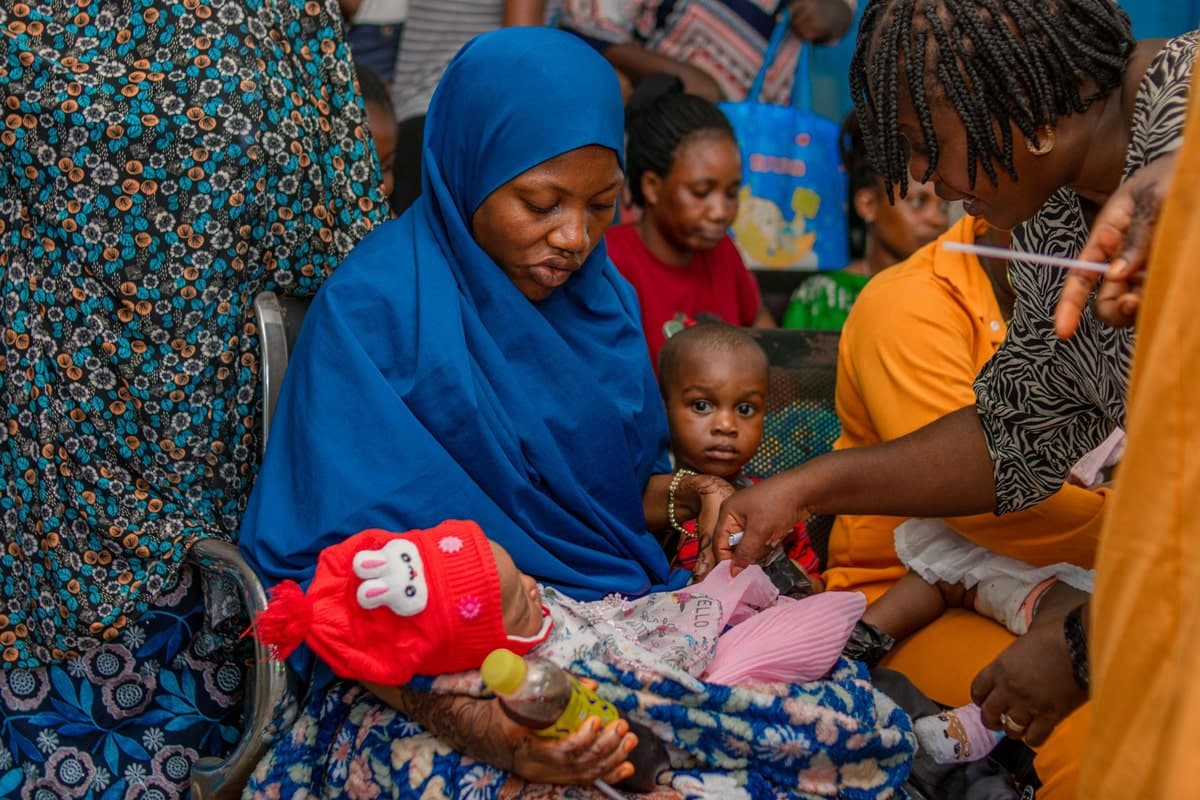
Across Nigeria, over 2.25 million children have never received a single vaccine, making it home to the highest number of zero-dose children in Africa and accounting for approximately 16% of the global total1. These children are particularly vulnerable to preventable diseases and often live in underserved communities facing overlapping challenges like malnutrition, poor sanitation, and limited healthcare access2.
With over 1.6 million vaccine doses delivered to vaccinate zero-dose and underimmunized children in Nigeria in 2024 alone, The Pfizer Foundation’s commitment to healthcare innovation and equity, paired with Zipline’s cutting-edge drone delivery technology, is helping change that reality. Since 2016, The Pfizer Foundation and Zipline have been working together to bridge access gaps, enabling healthcare systems in Ghana and Rwanda – and now Nigeria – to bring vaccines, medical supplies, and critical treatments to the most remote and underserved communities. In areas like Cross River, this means families no longer have to watch their children suffer from preventable illnesses, and healthcare workers can confidently provide life-saving interventions.
While emergencies like cholera highlight the need for timely treatment, prevention remains the long-term goal. By prioritizing zero-dose children and their families, The Pfizer Foundation and Zipline are tackling the root causes of health inequities. Beyond vaccines, integration of primary healthcare items into Zipline deliveries is making a significant impact. Nutritional supplements like vitamin A are reducing malnutrition, treatments are reaching vulnerable children like that 6-year old boy, and maternal health supplies are supporting new mothers. Each delivery not only saves lives but also helps break the cycles of deprivation that leave these communities behind.
Madam Ovat’s words are a powerful reminder of the human impact behind the numbers. For every child saved, every vaccine delivered, and every mother supported, a story of resilience and hope unfolds. By focusing on zero-dose children, The Pfizer Foundation and Zipline are not just transforming healthcare. Together, they are ensuring that no child, no matter how remote their home, is beyond the reach of care.
Nigeria leads top 20 zero-dose countries, says WHO report. Healthwise, 2024. https://healthwise.punchng.com/nigeria-leads-top-20-zero-dose-countries-says-who-report.
Reaching Zero-dose Children. Gavi, the Vaccine Alliance. https://www.gavi.org/our-alliance/strategy/phase-5-2021-2025/equity-goal/zero-dose-children-missed-communities.